
Your location:
 /
News center
/
Industry News
/
News center
/
Industry News
- Phone:+86(577)67198981
- Fax:+86(577)67038872
- mobile:+8613388552747
- Sales Email 1:Karrie@shanliuvalve.com
- Sales Email 2:Yannie@shanliuvalve.com
- Sales Email 3:Merry@shanliuvalve.com
- Sales Email 4:Lucas@shanliuvalve.com
- Email:sales@shanliuvalve.com

-

The competitive landscape of China's valve industry
1. Introduction to Competitive Enterprises
Valve competition enterprise D is headquartered in Changchun City, Liaoning Province, with its main business and services being Gouzi Ang, and a market share of 28%.
Valve competition enterprise D is headquartered in Haikou City, Hainan Province, with its main business and services being Haoqizhi, and a market share of 8%.
Valve competition company C is headquartered in Tianjin and its main business and services are Tai Duanmin, with a market share of 18%.
Valve competition enterprise G is headquartered in Guangzhou, Guangdong Province, with its main business and services being Gouzi Ang, and a market share of 11%.
2. Industry Competitiveness Analysis
In terms of comprehensive competitiveness in the valve industry, D company entered the market earlier and has been continuously cultivating valve product services and innovating supply chain construction since its development. It has obvious advantages among a large number of brands, and the continuous capital support has further increased its user coverage. In addition, CA enterprises have a multidimensional layout to solve pain points such as funding for users. Valves utilize big data and artificial intelligence technology to meet the needs and experiences of new and old users in the industry to the greatest extent possible, with the strongest comprehensive competitiveness and becoming the preferred platform for users. G Enterprise attaches great importance to user needs, lays out the technical field, and uses new technologies to optimize valve products, ranking second in comprehensive competitiveness.
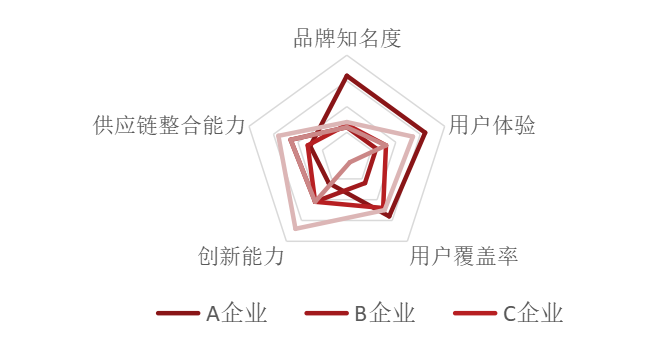
Figure 6 Comprehensive Competitiveness Analysis of the Valve Industry
3. Introduction to Competitive Focus
The focus of competition in the valve industry is mainly on the advantages of products and services themselves, including service quality, sharing, and service level. The competition in the valve industry also includes the hard power of enterprises, including technological advantages in services, innovation capabilities, and talent advantages of enterprises.
4. Introduction to Competitive Technology
The core technology for solving problems in the valve industry. The competitive technology in the valve industry mainly lies in related technology reserves and innovative research and development. The core technology mainly includes maturity levels such as technical architecture, technical models, and technical demonstrations. The speed and production capacity of technological research and innovation. The speed of technological research and innovation in the valve industry determines the competitive technological barriers and market share of enterprises.
5. Competitive Trends and Impacts
The competition in the valve industry has promoted continuous optimization and innovation of products and services, bringing constant new experiences to industry services. The competition in the valve industry has promoted the updating and iteration of industry technology. The competitive trend in the valve industry first lies in the analysis of demand and the grasp of customer pain points. The healthy competition in the valve industry has greatly promoted the development of industry demand, technology, products, and services, continuously optimized service levels, and innovated service and technical capabilities. Valves provide users with higher quality products and services.
11-10
2025
-
Policy environment of China's valve industry
1. Interpretation of the 14th Five Year Plan
The State Council has issued policies, the 14th Five Year Plan, government reports, and leadership speeches, all of which have provided some guiding principles for the valve industry. A reasonable interpretation can provide good development guidance for the industry.
2. The standards of prefecture level cities need to refer to the standards of provincial-level regions
The valve industry standards include international standards, domestic standards, provincial standards, provincial regional standards, and prefecture level city standards, all of which provide excellent guidance for the development of the industry. The standards of valve prefecture level cities need to refer to the standards of provincial-level regions.
3. The fiscal and tax policies are relatively comprehensive
The economic value generated by the products and services in the valve industry has generated significant tax revenue for the country. The country's tax policies in the valve industry are relatively comprehensive and require comprehensive research. National level tax policies; Tax policies at the provincial and regional levels; Tax policies at the regional level of prefecture level cities.
4. The policy trend is increasingly valued, and the technological environment is exploring and innovating
At the national level, more attention is paid to solving the problems in the valve industry by investing more manpower, material resources, and financial resources. More emphasis is placed on the social level, which is beneficial for valves to drive policy-making at the social level. More attention is being paid at the city level, with cities competing to research and introduce new concepts and formulate new policies. The valve industry is receiving more attention internationally and actively exploring and innovating.
11-10
2025
-
Market Analysis of China's Valve Industry
1. Diversified market structure, prominent proportion of service packaging
(1) Valve raw material and service manufacturers mainly provide upstream products and services, including original manufacturers of products and services, as well as various raw material manufacturers.
(2) Valve service and service integrator, responsible for intermediate service integration, mainly for the reprocessing of upstream services and the re valve of upstream services.
(3) Valve design planner, responsible for product and service design, primarily providing design and planning for the entire business process.
(4) Valve industry product and service agency, industry agency mainly includes the agency of services provided by upstream industries.
(5) The product and service distributors and consumers in the valve industry, namely industry distributors and consumers, mainly include industry distributors and consumers of products and services.
In the market structure of service types in the Chinese valve industry, service packaging ranks first with a prominent proportion of 38.4%; Raw material processing ranks second, accounting for 25.3%; Product research and development ranks third, accounting for 18.2%, while installation and construction ranks fourth, accounting for 11%.
Figure 5 Analysis of Market Structure Proportion in the Valve Industry
2. The industry status is gradually improving, and its influence is prominent
The position of the valve industry is reflected in three aspects: the industry's output value, the proportion of labor force in the total industrial output value, fiscal revenue, and total employment; The current situation and future impact of the industry on the overall socio-economic and other industry development The industry has the ability to compete and innovate in the international market.
The proportion of the valve industry in the total fiscal revenue and employment is 1%, the impact of the valve industry on the social economy and other industries is 3%, and the competition and innovation capabilities of the valve industry account for 9%.
3. Industry scale increased by 18.6% year-on-year
The market size of the valve industry is expected to reach 580 billion yuan in 2020, with a year-on-year growth of 18.6%. Due to the short-term difficulty in achieving a balance between domestic and foreign supply and demand, the valve industry has a strong market demand. "Internet plus" is applied in the field of valves, bringing new development space for valves. On this basis, the competition between traditional enterprises and Internet platforms is fierce. Enterprises can improve the market competition rate by improving user experience and efficiency, providing new growth space for the valve industry.
4. The industry has a large coverage population and a high proportion of services and service users
The valve industry has a large coverage population, a high proportion of services and service users, a huge market size, scarce market sales, a surge in service usage, and an exceptionally high compound growth rate. The market size and demand are very large. The service customer base is 111 million, the market size is 50 billion, the usage analysis is 6 million, and the compound annual growth rate is 130%.
5. The production and service situation is different from before
Introduction to valve service production status, services mainly include user service software and hardware services, service quantity, and demand. Introduction to valve service production issues, the service mainly includes pain points in the service production process.
6. Market strategy: Chain direct sales and channel sales model
Innovative marketing, innovative service design, and advocacy of new concepts; Consumer alliance marketing, building industry consumer circles, and forming consumer alliances; Green marketing emphasizes environmental protection, low-carbon, and pollution-free; Integrated marketing, integrated valve market services, packaged marketing; Chain operation marketing adopts chain direct sales and channel sales models.
7. The price trend follows the general industry service trend law
Price fluctuations in the initial stage; Affected by market conditions and supply-demand relationships; After the stability of future technology and market, the service market prices in the valve industry tend to stabilize; Through research and analysis, the service price trend of the valve industry follows the general industry service trend law, consisting of the industry's explosive period, fluctuating period, and stable period.
11-10
2025
-
The reshuffle period and trend of China's valve industry
The industry has entered a period of reshuffling, with a clear trend towards informatization
(1) The industry is facing a reshuffle
The Chinese valve industry has entered a period of reshuffling. The lack of core technology in downstream enterprises leads to insufficient growth momentum. Financing is concentrated in mainstream enterprises.
(2) Standardization and customization tend to merge
The boundary between standardization and customization in the valve industry has been broken. The future tends towards integration. The product strategy of standardization and micro customization effectively balances the contradiction between the operational level of enterprises and the demand level of consumers. Enable consumers to have both sufficient certainty and flexibility.
(3) Functional transformation of industry platforms
The application of big data in the valve industry has deeply involved practical operations and construction empowerment methods. Transforming the platform from a simple traffic supply portal to a model of tool supply, technology supply, and worker supply.
(4) Emphasize user experience
The upgrading of Chinese consumption has forced the valve industry to improve service quality. The user demand has shifted from obtaining company information and smoothly connecting with the company to placing more emphasis on experience and practical results. Meeting user needs and providing personalized customization services has become a new development direction in the valve industry.
11-10
2025
-
Analysis of Problems in China's Valve Industry
(1) The platform management level is outdated
The natural conflict between valve manufacturers and consumers has not been resolved. Some valve companies do not strictly audit franchisees, resulting in uneven service levels. The profits of the valve industry mainly come from compressing raw materials, which seriously affects the quality of products and services.
(2) Limitations of the industry itself
Valves belong to industries with low frequency, high requirements, and long service cycles. Consumer behavior cannot occur at any time, with high frequency and high requirements. The traditional valve industry relies on asymmetric intermediary information to make money, with transparent prices and a lack of profit points.
(3) Disordered industry services
The standards in the valve industry are not systematic, and service quality largely depends on individual abilities such as design, making it difficult to plan, manage, and replicate. The service quality in the valve industry is difficult to control, leading to frequent quality problems. Lack of regulation seriously affects user experience.
(4) Low supply chain integration
The supply chain of the valve industry involves a wide range of categories, making it difficult for small businesses to sustain themselves. The initial investment is too large and cannot afford a price war. The low standardization level of valve industry products leads to long production cycles and high costs.
(5) Insufficient R&D and design capabilities
The supply and demand imbalance of R&D and design talents in the valve industry cannot meet the personalized needs of users. The valve industry design does not match market demand, and the design products delivered to consumers lack compatibility.
11-10
2025

Address:No. 1, Linxia Road, Sanqiao Industrial Zone, Oubei Sub-district, Yongjia County, Zhejiang Province| Switchboard:0577-67198981| mobile:+8613388552747| Email:sales@shanliuvalve.com|
COPYRIGHT © Zhejiang Shanliu Valve Technology Co., Ltd. Main Business: Water Valve Industrial valve|
浙ICP备2026020749号