Your location:
 /
valves
/
Gate Valve
/
hard seal gate valve
/
JIS Standard Rising Stem Metal-Seated Gate Valve
/
valves
/
Gate Valve
/
hard seal gate valve
/
JIS Standard Rising Stem Metal-Seated Gate Valve

Mark Classification of Fluid products
- Phone:+86(577)67198981
- Fax:+86(577)67038872
- mobile:+8613388552747
- Sales Email 1:Karrie@shanliuvalve.com
- Sales Email 2:Yannie@shanliuvalve.com
- Sales Email 3:Merry@shanliuvalve.com
- Sales Email 4:Lucas@shanliuvalve.com
- Email:sales@shanliuvalve.com

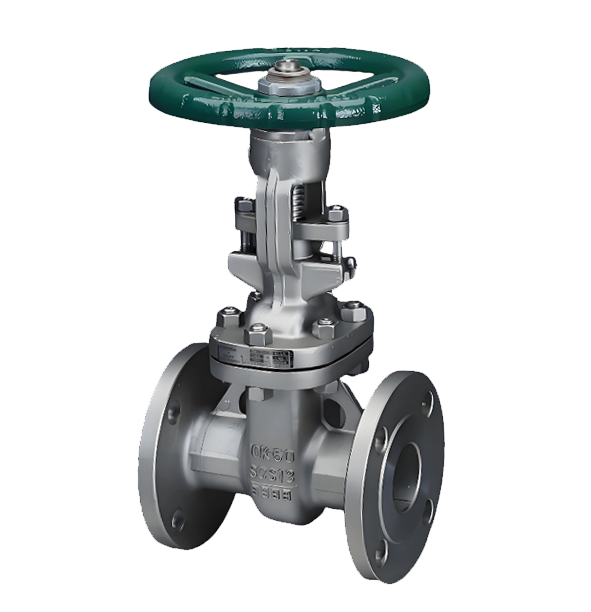
JIS Standard Rising Stem Metal-Seated Gate Valve
- Model:Z41T-5K/Z41T-10K/Z41T-20K/Z41H-5K/Z41H-10K/Z41H-20K
- Specification:DN50-DN500
- Temperature:-20~+150℃-425~550℃
- Medium:water, oil, steam, gas, and corrosive media.
- Pressure:5K-20K
- Connection method:flange
- Driving method:manual, bevel gear transmission, and electric
- Material:ductile iron, cast steel, stainless steel


Add QR code to serve you!
- Product Overview
- Performance Data
- Size Weight
JIS rising stem Japanese standard hard seal gate valve is a rising stem wedge gate valve designed and manufactured strictly in accordance with Japanese Industrial Standards (JIS). The valve stem rises and falls together with the gate, and the valve opening can be intuitively judged by observing the height of the valve stem extension. The sealing surface adopts a metal to metal hard sealing structure (such as alloy steel welding) to form a reliable hard sealing pair. The connection end complies with Japanese standard flange standards (such as JIS B 2238, JIS B 2210) and is suitable for pipeline systems in Japan and Asia that follow the Japanese standard system. This valve is designed specifically for medium and high pressure, high temperature, and wear-resistant working conditions, and is an ideal choice for Japanese funded enterprises, export equipment to Japan, and engineering projects that adopt Japanese standard design. Widely used in petrochemical, municipal water supply, sewage treatment, power, shipbuilding, and general industrial pipeline systems in Japan and Asian countries (such as South Korea and Southeast Asia) that adopt Japanese standard design. Especially suitable for Japanese owned enterprises' factories in China, export equipment to Japan, and engineering projects constructed according to JIS standards. Commonly used for transporting water, steam, oil, gas, and weakly corrosive media in medium and high pressure pipelines, as a key cutting device that requires intuitive display of opening, easy monitoring, and maintenance.
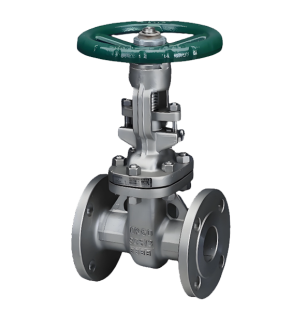
JIS Standard Rising Stem Metal-Seated Gate Valve Product Drawing
Features
1. Complies with JIS Japanese standard specifications
The design, dimensions, testing, and acceptance strictly follow Japanese industrial standards (such as JIS B 2031, JIS B 2002, JIS B 2210), and the pressure rating, structural length, and flange size fully comply with Japanese standard requirements, ensuring perfect compatibility with Japanese standard piping systems.
2. Clear stem structure, intuitive valve position
The valve stem rises and falls with the gate, and the operator can accurately judge the valve opening by observing the height of the valve stem extension, which is convenient for system process control and safety management, and meets the requirements of Japanese standards for operational visibility.
3. Metal hard seal (hard seal)
The sealing surface of the valve disc and seat is made of alloy steel (such as 13Cr, SCS13 hardened treatment) with high hardness, wear resistance, erosion resistance, and high temperature resistance. It is suitable for steam, hot water, oil, and particulate media, and has a long service life.
4. Japanese standard flange connection
Flanges with connection ends that comply with JIS B 2238 or JIS B 2210 standards (such as 5K, 10K, 16K, 20K pressure ratings), with sealing surfaces in the form of flat or protruding surfaces, seamlessly interface with Japanese standard piping systems.
5. Full bore design with low flow resistance
Adopting a full bore flow channel, the medium has low flow resistance and pressure loss, making it suitable for high flow conveying systems and meeting the hydraulic performance requirements of Japanese standards.
6. Multiple materials to choose from
The valve body material can be selected from gray cast iron (FC), ductile iron (FCD), cast steel (SCPH), stainless steel (SCS13/SCS14), etc., to meet the requirements of different media and working conditions, with a wide range of applicable temperatures.
Part Name Material
| 体盖瓣 Body Cover Disc | 阀杆 Stem | 密封面 Sealing Face | 垫片(环) Sealing Shim | 填料 Packing | 工作温度℃ Working Temperature | 适用介质Suitable Medium |
| WCB | 2Cr13 | 13Cr STL 木体材料 With Body Material 尼龙 Nylon | 增强柔性石墨 13Cr/柔性石墨Enhanced Flexible Graphite 1Cr13/Flexible Graphite SFB-2 08软钢 08 Soft Steal F304 F316 F304L F316L | 柔性石墨 增强柔性石墨 Flexible Graphite Enhanced Flexible Graphite SFB/260 SFP/260 PTFE | ≤425 | 水 蒸汽 油品 Water Steam Petroleum Products |
| WC1 | 38CrMoAl 25Cr2MoV | ≤425 | ||||
| WC6 | ≤540 | |||||
| WC9 | ≤570 | |||||
| C5 C12 | ≤540 | |||||
| CF8 | F304 | ≤200 | 硝酸 醋酸 尿素 Nitric acid Acetic acid | |||
Performance Specifications Table
| 设计与制造 Design and Manufacture | 强度试验 Shell Test | 水密封试验 WaterSeal Test | 气密封试验 Air SealTest | |||
| MPa | Lbf/in2 | MPa | Lbf/in2 | MPa | Lbf/in2 | |
| 150 | 3.0 | 430 | 2.2 | 315 | 0.4-0.7 | 60-100 |
| 300 | 7.7 | 1110 | 5.7 | 815 | ||
| 600 | 15.3 | 2220 | 11.3 | 630 | ||
| 900 | 23.0 | 3330 | 17 | 2445 | ||
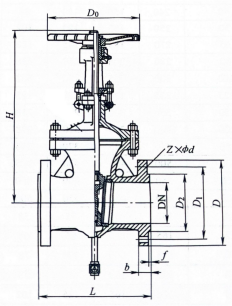
JIS Standard Rising Stem Metal-Seated Gate Valve Outline Drawing
Dimension Chart
| DN(mm) | in | L | D | D1 | D2 | b | n-φd | H | D0 | W(kg) |
| 50 | 2 | 178 | 155 | 120 | 100 | 16 | 4-19 | 409 | 200 | 24 |
| 65 | 21/2 | 190 | 175 | 140 | 120 | 18 | 4-19 | 535 | 250 | 31 |
| 80 | 3 | 203 | 185 | 150 | 130 | 18 | 8-19 | 570 | 250 | 40 |
| 100 | 4 | 229 | 210 | 175 | 155 | 18 | 8-19 | 590 | 250 | 55 |
| 150 | 6 | 267 | 280 | 240 | 215 | 22 | 8-23 | 630 | 300 | 90 |
| 200 | 8 | 292 | 330 | 290 | 265 | 22 | 12-23 | 960 | 350 | 145 |
| 250 | 10 | 330 | 400 | 355 | 325 | 24 | 15-25 | 1158 | 400 | 230 |
| 300 | 12 | 356 | 450 | 400 | 370 | 24 | 16-25 | 1378 | 450 | 330 |
| 350 | 14 | 381 | 490 | 445 | 415 | 26 | 16-25 | 1543 | 500 | 460 |
| 400 | 16 | 406 | 560 | 510 | 475 | 28 | 16-27 | 1738 | 600 | 600 |
| 450 | 18 | 432 | 620 | 565 | 530 | 30 | 20-27 | 1959 | 600 | 980 |
| 500 | 20 | 457 | 675 | 620 | 585 | 30 | 20-27 | 2214 | 680 | 960 |
-
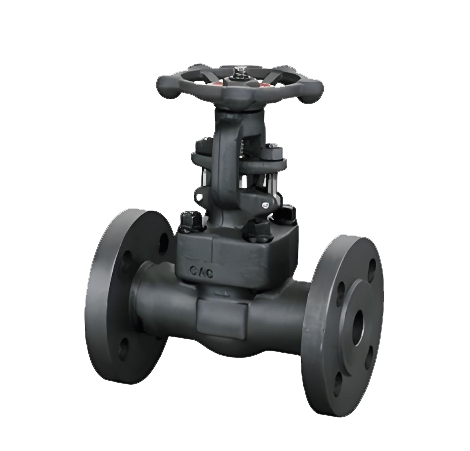 Z41H Forged Steel Flanged Gate Valve
Model:
Z41H-16C/Z41H-25C/Z41H-40C/Z41H-64C/Z41H-100C//Z41H-160C//Z41H-320C/Z41H-16P/Z41H-25P/Z41H-40P/Z41H-64P/Z41H-100P//Z41H-160P//Z41H-320P/Z41H-16R/Z41H-25R/Z41H-40R/Z41H-64R/Z41H-100R//Z41H-160R//Z41H-320RSpecification:
DN15~DN65Pressure:
PN16~PN320Material:
forged steel, forged stainless steel -
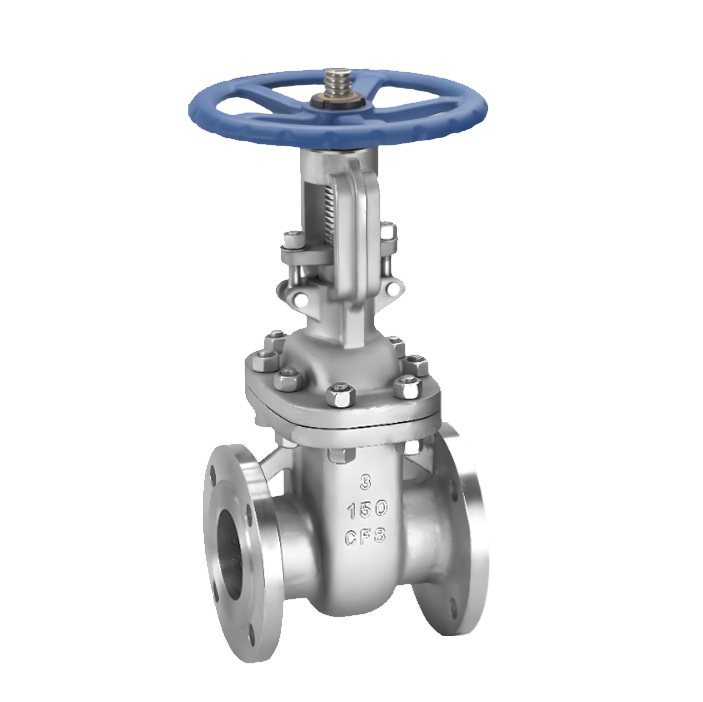 Z41W-150LB American Standard Gate Valve
Model:
Z41W-150LB/Z41W-300LB/Z41W-600LB/Z41H-150LB/Z41H-300LB/Z41H-600LB/Z41Y-150LB/Z41Y-300LB/Z41Y-600LBSpecification:
NPS 1/2-NPS 12Pressure:
5K-20KMaterial:
cast steel, stainless steel -
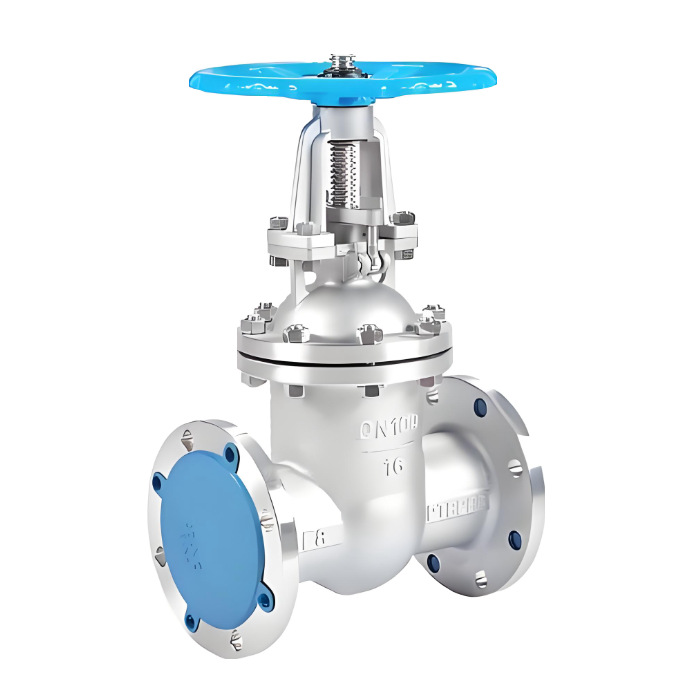 Z41H Stainless Steel Gate Valve
Model:
Z41H-16C/Z41H-25C/Z41H-40C/Z41H-64C/Z41H-16P/Z41H-25P/Z41H-40P/Z41H-64P/Z41H-16R/Z41H-25R/Z41H-40R/Z41H-64RSpecification:
DN20-DN600Pressure:
PN16-PN64Material:
cast steel, stainless steel
What are the structural characteristics of knife gate valves? A detailed explanation of their six major advantages and application areas
Description: This article provides a detailed analysis of the unique structure, six core characteristics, and working principle of knife gate valves. It explains how they achieve automatic control through accessories and are widely used in industries such as chemical, paper, and wastewater treatment. They are ideal sealing and throttling valves.
Text:
The knife gate valve, as a high-performance industrial valve, is widely used in various fields such as chemical industry, coal, sugar manufacturing, sewage, paper making, etc., due to its unique structure and excellent performance. It is particularly suitable for regulating, throttling, and cutting off media in pipelines. This article will provide an in-depth analysis of the structural composition and core characteristics of the knife gate valve.
I. Basic Structure and Working Principle of Knife Gate Valve The knife gate valve is primarily composed of left/right valve bodies, U-shaped sealing rings, gate plates, valve stems, brackets, and driving devices (such as cylinders). Its core opening and closing actions are typically driven by cylinders. With supporting accessories such as solenoid valves and proximity switches, it can easily achieve on-off control, signal feedback, or continuous automatic adjustment, demonstrating a high degree of automation integration.
II. Six Core Structural Features of Knife Gate Valves The excellent performance of knife gate valves stems from their carefully designed structure, which is mainly reflected in the following six aspects:
The wafer-style design is compact and lightweight. Utilizing an advanced wafer-style connection structure, it significantly reduces the volume and weight compared to traditional flange valves, saving installation space and reducing the load on the pipeline system.
The full-bore flow passage provides a completely open straight-through channel when the non-clogging valve is opened, allowing the medium to pass through unimpeded. This design effectively prevents the deposition and clogging of media such as slurry and particles within the valve body, making it particularly suitable for applications involving fibers or solid particles, such as in paper making and wastewater treatment.
U-shaped seal ring, excellent sealing performance. A specially designed elastic U-shaped seal ring is used as the main seal, which can adaptively compensate for wear, ensuring that the valve maintains good bidirectional sealing performance and low leakage rate even after long-term use.
The elastic valve seat facilitates the maintenance of the gate plate's external seal, which is achieved by an elastic sealing strip embedded in the valve body. This sealing strip can be adjusted or quickly replaced using screws and a pressure plate, making maintenance simple and greatly extending the service life of the valve while reducing maintenance costs.
Streamlined design ensures minimal flow resistance. Due to the straight and smooth channels, as well as the thin and sharp gate plate (shaped like a blade), the flow resistance experienced by the medium is negligible, contributing to a reduction in system energy consumption.
Modular structure, convenient for installation and maintenance. The overall structure is designed to be simple and highly modular, making installation, disassembly, and routine maintenance very convenient, significantly reducing downtime for maintenance.
III. Summary of Application Scenarios Due to its prominent features of anti-clogging, easy adjustment, good sealing, and low flow resistance, the knife gate valve has become an ideal choice for handling harsh working conditions such as viscous media, slurry, dust mixtures, and sewage. It plays an irreplaceable key role in pulp adjustment in the paper industry, material liquid transportation in the chemical industry, emission control in sewage treatment plants, and solid material pipelines in industries such as coal and sugar manufacturing.
In summary, the knife gate valve is a valve solution that highly combines practicality, reliability, and economy. Its innovative structural design directly addresses common pain points in industrial applications, making it an indispensable and important component in modern process industry pipeline systems.
Rewriting instructions:
Enhance title and keyword layout: Optimize the title according to SEO requirements, extract core keywords such as "structural features", "advantages", and "application areas", and distribute them reasonably.
Optimize content structure and hierarchy: Adjust the segmentation of the original text, adopt hierarchical headings and bullet points, and enhance the coherence and readability of the information.
Supplementary induction and summary of applicable scenarios: Add a summary paragraph to highlight the comprehensive value of the product, enhancing the depth of content and user reference value.
If you prefer a more lively or technical document style, I can continue to optimize and adjust it for you.

Address:No. 1, Linxia Road, Sanqiao Industrial Zone, Oubei Sub-district, Yongjia County, Zhejiang Province| Switchboard:0577-67198981| mobile:+8613388552747| Email:sales@shanliuvalve.com|
COPYRIGHT © Zhejiang Shanliu Valve Technology Co., Ltd. Main Business: Water Valve Industrial valve|
浙ICP备2026020749号