Your location:
 /
valves
/
Lined valve

Mark Classification of Fluid products
- Phone:+86(577)67198981
- Fax:+86(577)67038872
- mobile:+86 13764597878
- Sales Email:ZCQ@shanliuvalve.com
- Email:sales@shanliuvalve.com

Lined valve
Lined valves are a type of specialized valve in which the inner wall of the metal valve body and the surfaces of key flow-path components are lined with anti-corrosion materials. The lining layer isolates the corrosive medium from the metal substrate, thereby combining the pressure-bearing strength of the metal shell with the corrosion resistance of the lining material. Commonly used lining materials include two major categories: rubber (such as natural rubber and butyl rubber) and fluoroplastics (such as PTFE, FEP, and PFA). Rubber-lined valves are suitable for general acid and alkali media and slurries containing particles, offering good wear resistance and elasticity. Fluorine-lined valves, relying on the excellent chemical inertness of fluoroplastics, can withstand the corrosive attack of strong acids, strong alkalis, strong oxidizers, and various organic solvents, with a wider applicable temperature range. Lined valves cover multiple categories including rubber-lined diaphragm valves, fluorine-lined diaphragm valves, pneumatic diaphragm valves, pneumatic pinch valves, electric pinch valves, fluorine-lined check valves, fluorine-lined plug valves, fluorine-lined ball valves, fluorine-lined butterfly valves, fluorine-lined strainers, and fluorine-lined globe valves, meeting the requirements of different pipeline systems for shut-off, regulation, backflow prevention, and filtration functions.
-
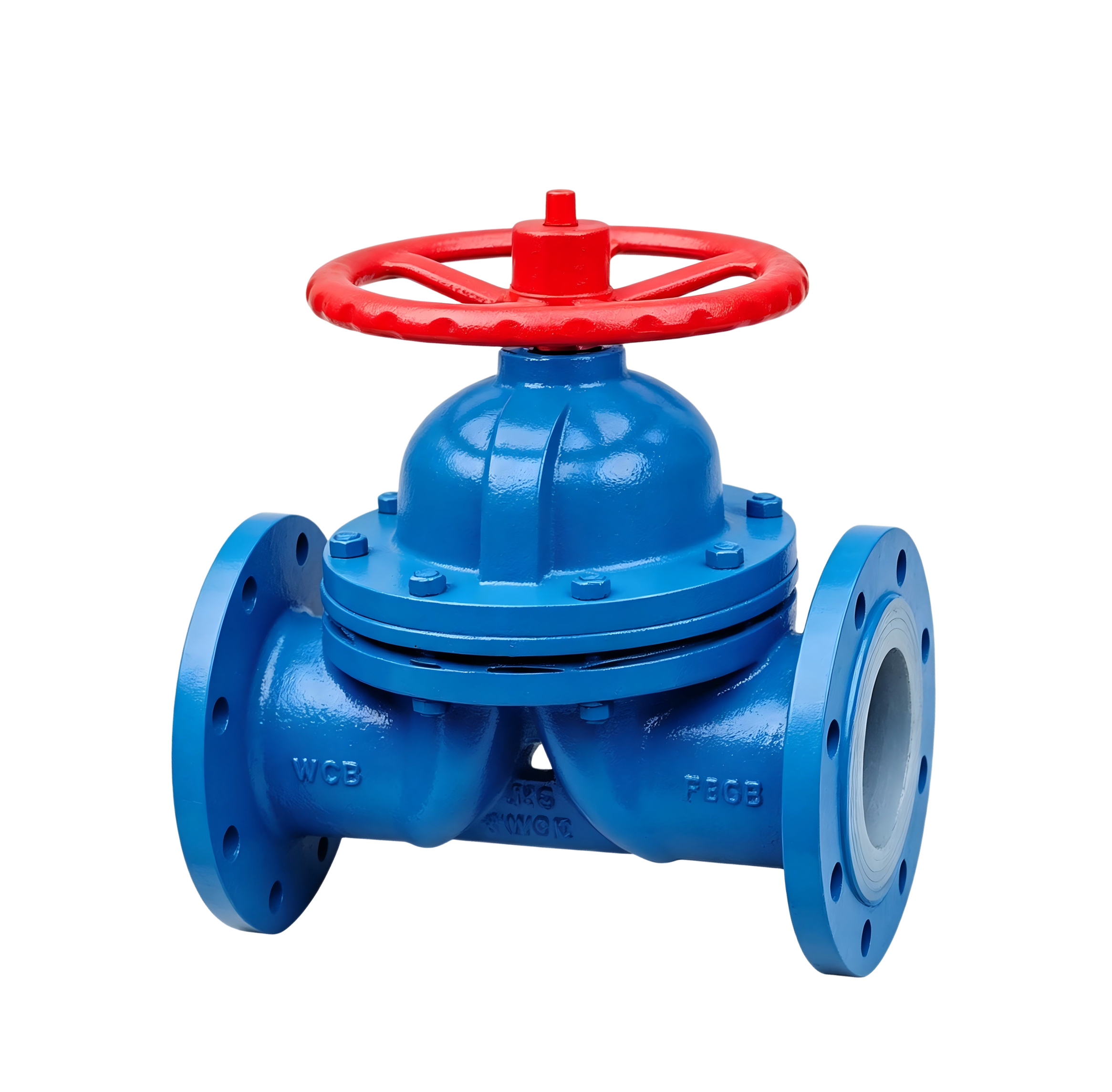
Diaphragm valve
Model:
G41F46/EG41W/EG46WSpecification:
DN15-400mmPressure:
0.6~1.6MpaMaterial:
Cast iron, ductile iron, cast steel, stainless steel + rubber, PTFEA diaphragm valve is a valve that opens and closes through the deformation of a flexible diaphragm. Its core feature is that the opening and closing member is completely isolated from the medium – the inner cavity of the valve body is separated by a corrosion-resistant elastic diaphragm, and the medium only contacts the diaphragm and the valve body, without direct contact with moving parts such as the valve stem and bonnet. Working principle: when the handwheel or actuator presses down on the valve stem, the stem pushes the diaphragm downward, causing the diaphragm to press tightly against the weir surface at the bottom of the valve body, thereby shutting off the medium passage. When the stem rises, the diaphragm returns to its original shape, and the passage opens. This design completely seals the medium within the valve body, eliminating external leakage, and is particularly suitable for handling toxic, hazardous, and valuable media. According to structure, they are divided into weir type (with a raised weir surface in the flow path, suitable for media containing particles) and straight-through type (with a straight flow path and low flow resistance). According to actuation method, they are divided into manual, pneumatic, electric, etc. Valve body materials are mostly cast iron, cast steel, or stainless steel, with diaphragm materials available in EPDM, PTFE, FKM, etc. They are widely used in chemical, pharmaceutical, food, water treatment, and bioengineering fields.View detail>>
-
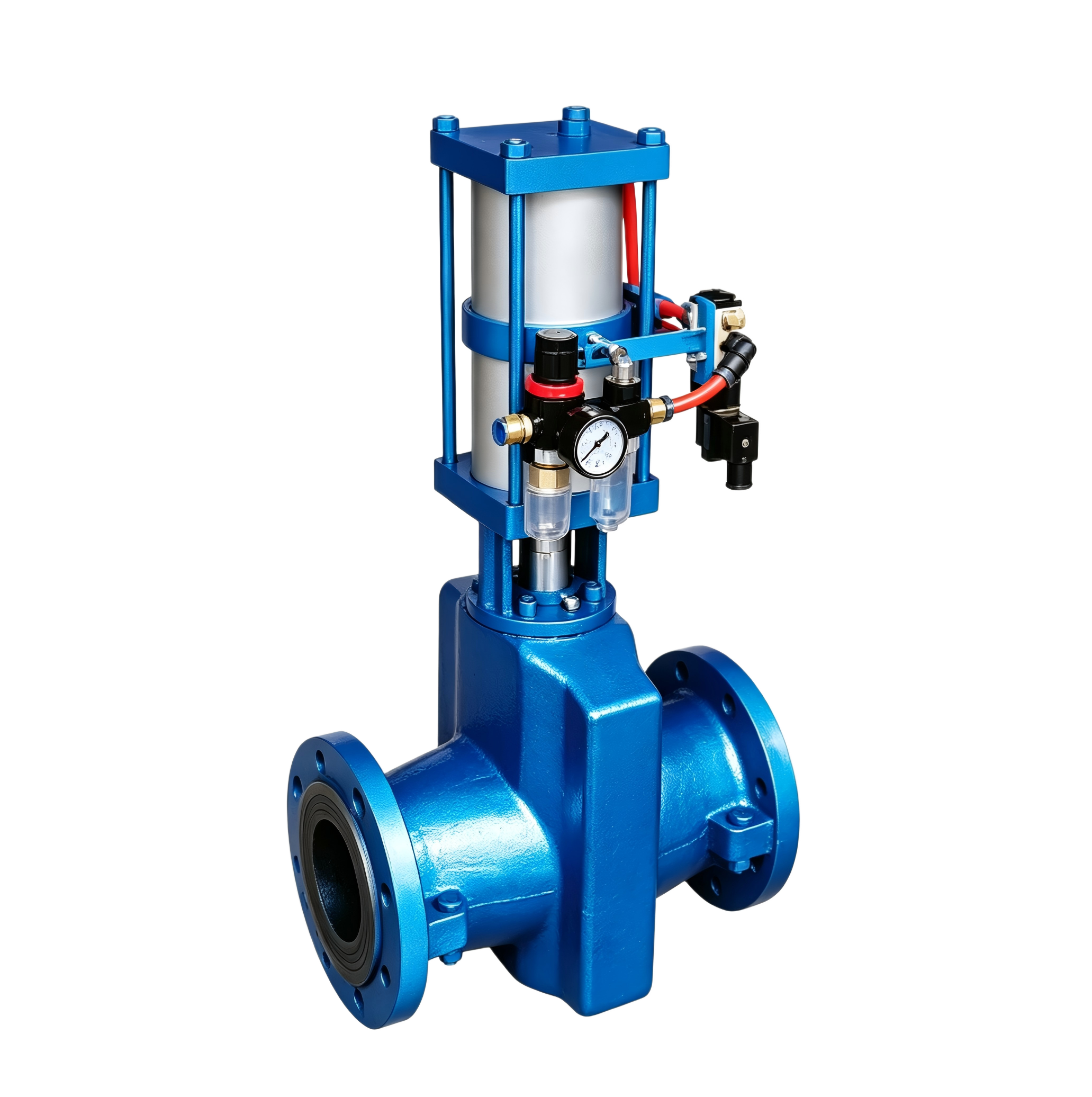
Pinch valve
Model:
GJ41X/GJ6K41X/GJ841XSpecification:
DN25~500mmPressure:
0.6Mpa,150LbMaterial:
Cast iron, cast steel, aluminum alloy + rubberA pinch valve is a valve that opens, closes, and regulates by pinching or releasing an elastic hose, also known as a hose valve or pinch valve. Its core feature is that the medium only contacts the elastic hose and does not come into contact with metal components such as the valve body or stem, fundamentally eliminating corrosion and contamination issues. Inside the pinch valve is an elastic rubber or fluoroplastic hose. A manual, pneumatic, or electric mechanism drives a clamping device (such as clamping jaws or a pressure bar) to squeeze the hose from the outside, deforming it to close and shut off the medium. When released, the hose returns to its original shape due to its own elasticity, opening the passage. This design gives the valve a self-cleaning function – there are no dead corners when the hose closes, particles in the medium do not get stuck, and the flow path is smooth with minimal resistance. According to actuation method, they are divided into manual pinch valves, pneumatic pinch valves, and electric pinch valves. Pinch valves have a simple structure, reliable sealing, wear and corrosion resistance, and low maintenance costs (only the hose needs replacement). Hose materials can be selected from natural rubber, EPDM, NBR, PTFE, etc., to suit different media.View detail>>
-
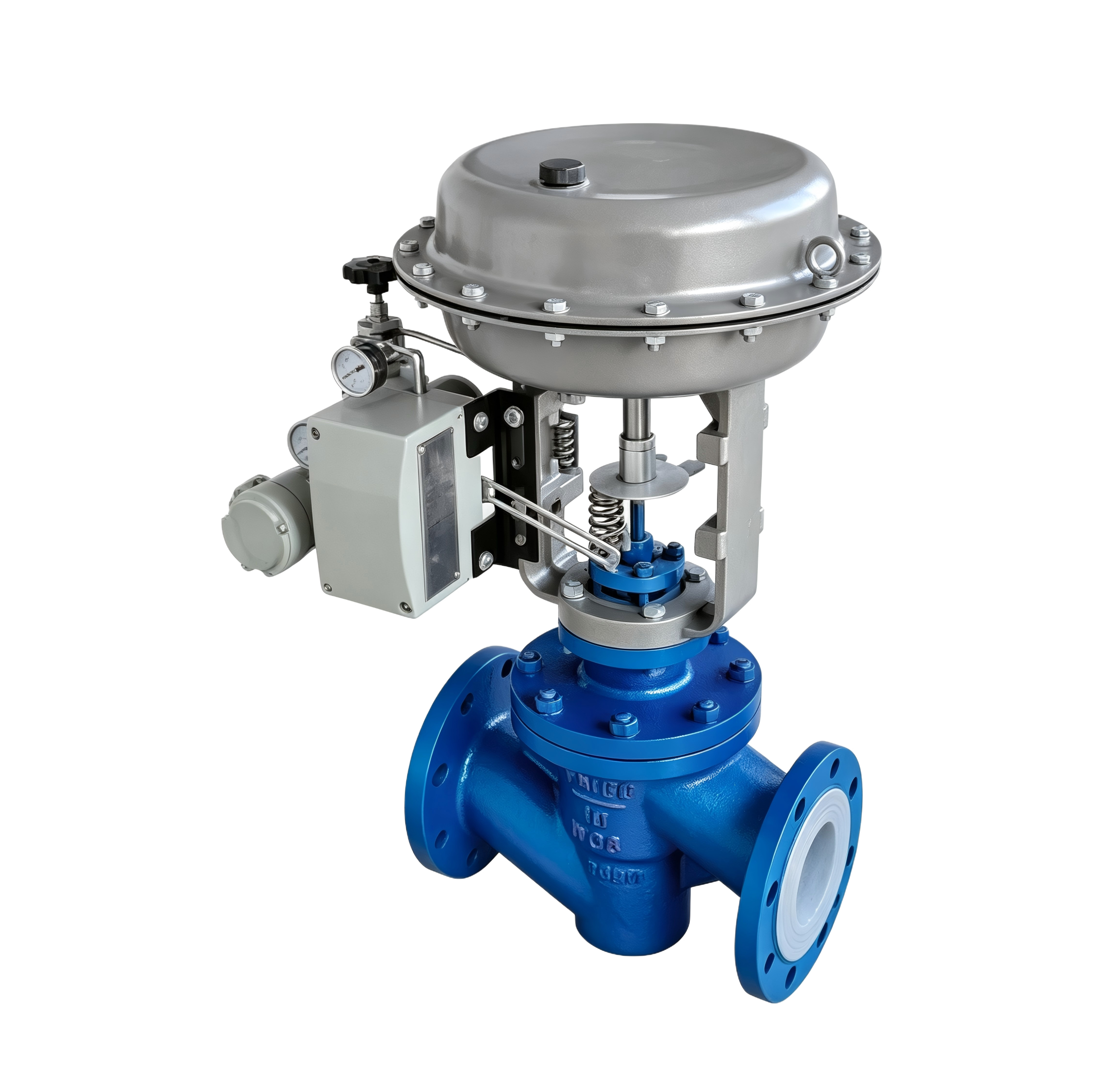
Fluorine-lined valve
Model:
Q41F46/H42F46/J41F46/J44F46/J45F46Specification:
DN15~250mmPressure:
0.6~2.5MpaMaterial:
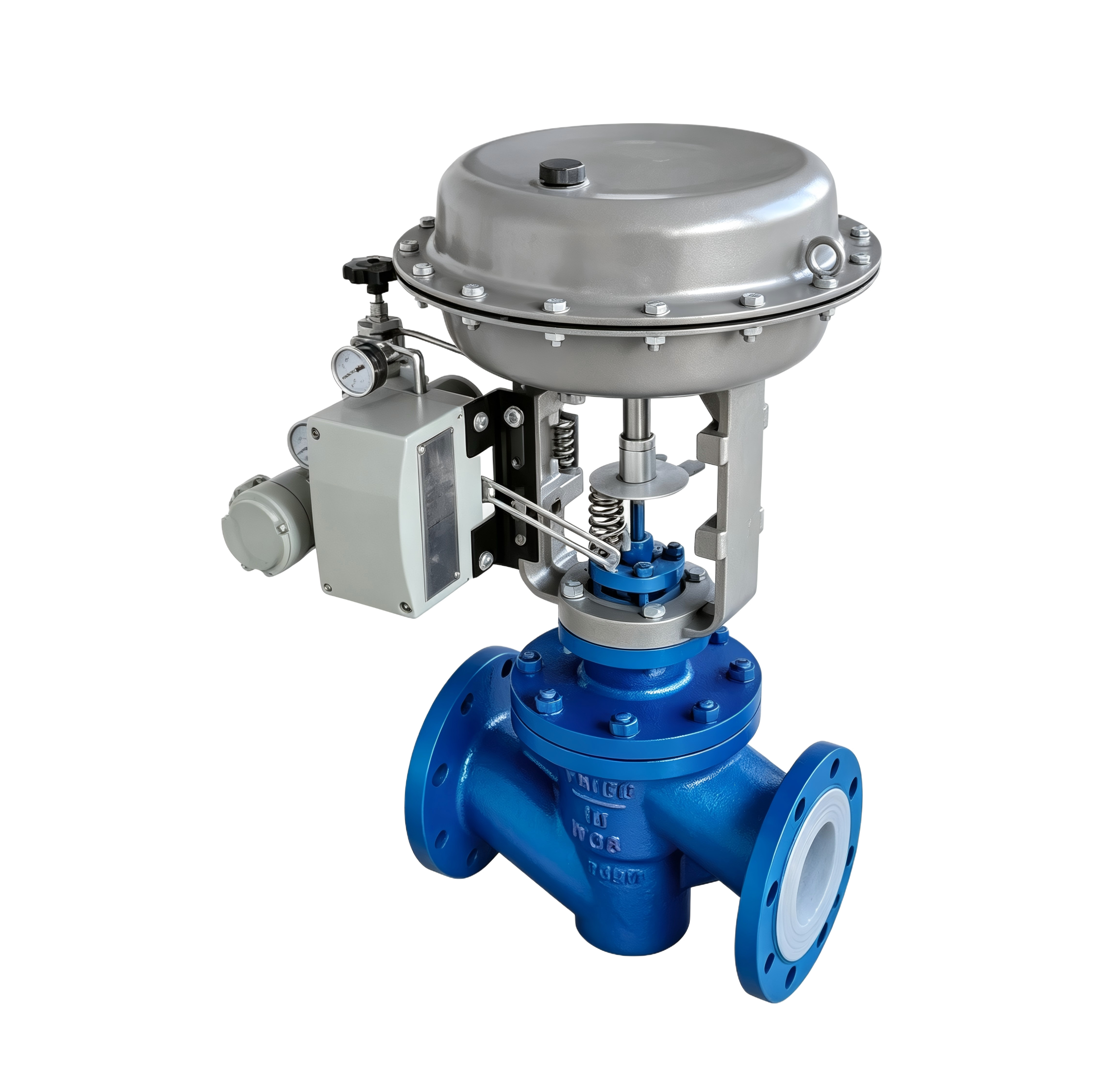
Cast iron, ductile iron, cast steel, stainless steel + PTFEFluorine-lined valves are a type of specialized valve in which the inner wall of the metal valve body and the surfaces of key flow-path components are lined with fluoroplastics (such as PTFE, FEP, PFA, etc.). The fluoroplastic lining layer completely isolates highly corrosive media from the metal substrate, combining the pressure-bearing strength of the metal shell with the excellent chemical inertness of fluoroplastics. Fluorine-lined valves are key equipment in industries such as chemical, petrochemical, pharmaceutical, metallurgy, and environmental water treatment for handling strong acids, strong alkalis, strong oxidizers, and various organic solvents. Fluoroplastic linings have an extremely low friction coefficient and excellent corrosion resistance, capable of withstanding the corrosive attack of almost all chemical media (except molten alkali metals and high-temperature fluorine). The applicable temperature range is typically -20°C to 180°C. The inner walls of fluorine-lined valves are smooth and not prone to scaling, and they also have excellent electrical insulation properties. Fluorine-lined valves cover multiple categories including fluorine-lined ball valves, fluorine-lined check valves, fluorine-lined globe valves, fluorine-lined gate valves, fluorine-lined butterfly valves, fluorine-lined plug valves, fluorine-lined control valves, and fluorine-lined strainers, meeting the requirements of different pipeline systems for shut-off, backflow prevention, regulation, and filtration functions.View detail>>
Address:No. 1, Linxia Road, Sanqiao Industrial Zone, Oubei Sub-district, Yongjia County, Zhejiang Province| Switchboard:0577-67198981| mobile:+8613388552747| Email:sales@shanliuvalve.com|
COPYRIGHT © Zhejiang Shanliu Valve Technology Co., Ltd. Main Business: Water Valve Industrial valve|
浙ICP备2026020749号