Your location:
 /
valves
/
Pressure Reducing Valve
/
Steam Pressure Reducing Valve
/
Y43H Steam Pressure Reducing Valve (Spirax Sarco Type)
/
valves
/
Pressure Reducing Valve
/
Steam Pressure Reducing Valve
/
Y43H Steam Pressure Reducing Valve (Spirax Sarco Type)

Mark Classification of Fluid products
- Phone:+86(577)67198981
- Fax:+86(577)67038872
- mobile:+8613388552747
- Sales Email 1:Karrie@shanliuvalve.com
- Sales Email 2:Yannie@shanliuvalve.com
- Sales Email 3:Merry@shanliuvalve.com
- Sales Email 4:Lucas@shanliuvalve.com
- Email:sales@shanliuvalve.com

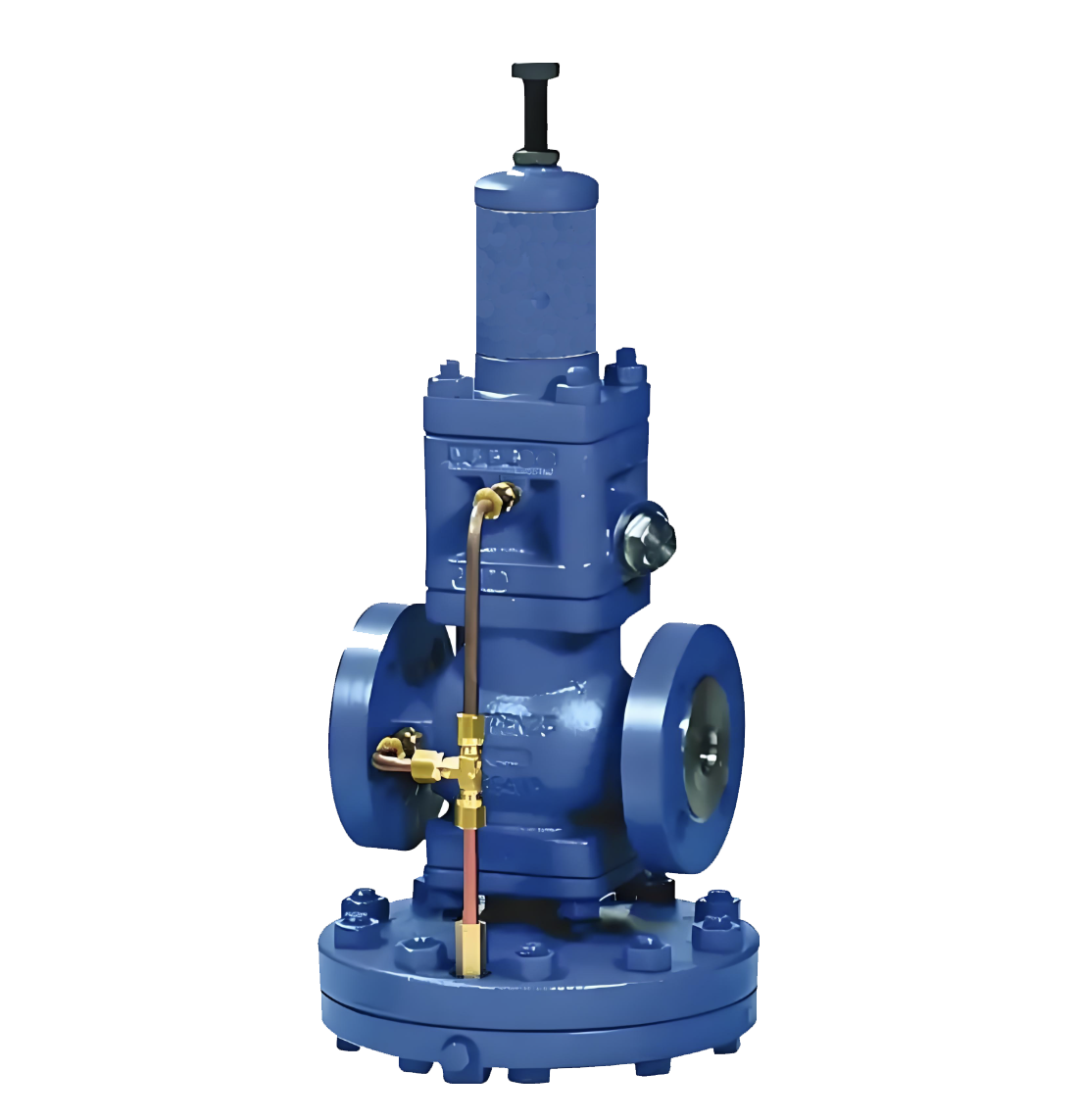
Y43H Steam Pressure Reducing Valve (Spirax Sarco Type)
- Model:Y43H-DP27/Y43H-DPE/Y43H-DP27Y
- Specification:DN15-DN50
- Temperature:≤232℃
- Medium:Water, steam, oil and similar liquids
- Pressure:PN10,PN21,PN25
- Connection method:Flange
- Driving method:Automated
- Material:Cast Iron, Carbon Steel, Stainless Steel


Add QR code to serve you!
- Product Overview
- Performance Data
- Size Weight
Y43H Steam Pressure Reducing Valve (Spirax Sarco Type) Overview
The Y43H Steam Pressure Reducing Valve (Spirax Sarco Type) is a pilot-operated piston-type steam-specific pressure reducing valve based on Spirax Sarco’s classic design philosophy. It adopts a two-stage pressure reduction structure with pilot valve sensing control and main valve piston actuation, specifically designed to stably and precisely reduce high-pressure superheated or saturated steam from boilers or main pipelines to the safe operating pressure required by process equipment or heating systems. Its core function is to achieve reliable control and stable supply of steam pressure under harsh working conditions such as large pressure differences, high temperatures and load fluctuations, ensuring the safe and efficient operation of steam-using equipment. Typically featuring a cast steel or stainless steel valve body and flange connection, it is an indispensable key pressure regulating device in industrial steam systems such as petrochemical, power generation, textile and food processing industries.
Y43H Steam Pressure Reducing Valve (Spirax Sarco Type) Product Image
Y43H Steam Pressure Reducing Valve (Spirax Sarco Type) Features
1. Steam-Specific Design, Reliable Performance Structurally optimized for steam medium characteristics. Adopts high-temperature resistant materials and rigid sealing, with a balanced piston design for the main valve. Ensures smooth operation without jamming or whistling under high-temperature and large pressure difference conditions, delivering stable and reliable pressure reduction with a long service life.
2. Pilot-Operated Piston Structure, Precise Control Features an independent pilot valve to accurately sense downstream pressure and drive the main valve piston through control pipelines. The large force-bearing area of the piston provides strong opening/closing force and excellent adjustment linearity for the main valve disc. It offers strong compensation for inlet pressure fluctuations and flow changes, achieving high outlet pressure control precision and superior pressure stabilization.
3. Wide Pressure Reduction Ratio, Strong Adaptability Boasts excellent pressure reduction capability with a typical ratio of 10:1 or higher. It can directly reduce high inlet steam pressure to low working pressure in one step, simplifying system design. The wide adjustment range allows easy setting of the required outlet pressure by adjusting the pilot valve spring.
4. High-Temperature Resistance, Safe and Durable All pressure-bearing components and sealing materials are selected for high-temperature steam conditions, capable of withstanding saturated steam and a certain degree of superheated steam for long-term use. The robust structure is usually equipped with a built-in stainless steel filter screen to protect the pilot valve from pipeline impurities, ensuring operational safety and durability under harsh working conditions.
5. Easy Maintenance, High Integration The pilot valve and main valve adopt a modular design, facilitating quick disassembly for inspection, maintenance, or replacement of internal components (such as valve seats, seals, diaphragms/piston rings). Some high-end models integrate pressure gauge interfaces and independent safety valves, realizing integrated pressure monitoring and overpressure protection, which reduces installation space and costs.
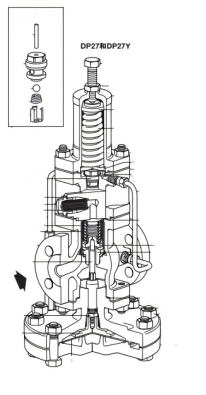
Y43H Steam Pressure Reducing Valve (Spirax Sarco Type) Structure Diagram
Parts Name Material List
| NO. | Name | Material |
| 1 | body | ductile iron、cast steel、stainless steel |
| 2 | pilot valve disc | stainless steel |
| 3 | pilot valve spring | stainless steel |
| 4 | main valve disc | stainless steel |
| 5 | main valve seat | stainless steel |
| 6 | main valve diaphragm disc | copper |
| 7 | pilot valve filter element | copper |
| 8 | pilot valve assembly and sealing | stainless steel+PEFE |
| 9 | regulating spring | stainless steel |
| Performance Specification | ||
| Nominal Pressure | 1/2.1/2.5 | MPa |
| Shell Test | 1.5/3.15/3.75 | |
| Seal Test | 1.1/2.31/2.75 | |
| Suitable Temp. | ≤232 | ℃ |
Dimensions Standard Requirements
1. The structural length of the valve shall conform to the standard GB/T12221.
2. The connecting flange shall conform to the standard GB/T 9113.
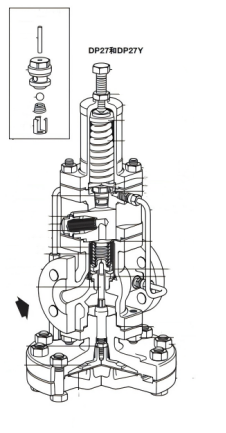
Y43H Steam Pressure Reducing Valve (Spirax Sarco Type) View Drawing
Y43H Steam Pressure Reducing Valve (Spirax Sarco Type) Dimensions Table
DP27 DP27E和DP27Y
| 口径 | 螺纹 A | BS 10HI A1 | PN16/25 A1 | ASME 300 A1 | BS 10F A1 | ASME 150 A1 | JIS10/16 A1 | B | D | E | F |
| DN15LC | 160 | 130 | 126.6 | 117 | 120.2 | 122 | 185 | 406 | 276 | 130 | |
| DN15 | 160 | 130 | 126.6 | 117 | 120.2 | 122 | 185 | 406 | 276 | 130 | |
| DN20 | 160 | 150 | 133 | 139.4 | 142 | 185 | 406 | 276 | 130 | ||
| DN25 | 180 | 160 | 160 | 160.0 | 160.0 | 152 | 207 | 430 | 282 | 148 | |
| DN32 | 180 | 180 | 180.0 | 176.0 | 176 | 207 | 430 | 282 | 148 | ||
| DN40 | 200 | 200 | 200.0 | 199.0 | 196 | 255 | 475 | 297 | 178 | ||
| DN50 | 230 | 230 | 230.0 | 228.0 | 222 | 255 | 475 | 297 | 178 |
-
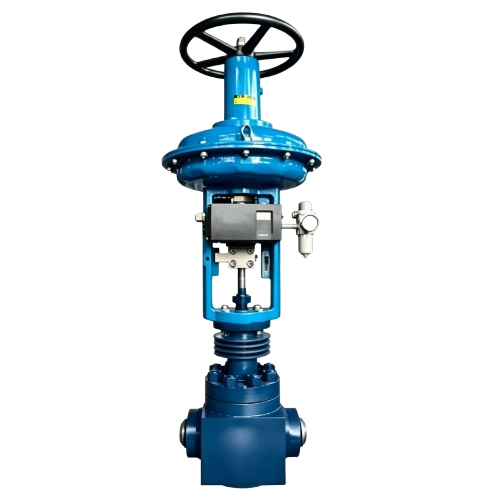 ZTP Pneumatic Desuperheating and Pressure Reducing Valve
Model:
ZTP-16C/ZTP-25C/ZTP-40C/ZTP-64C/ZTP-16P/ZTP-25P/ZTP-40P/ZTP-64PSpecification:
DN50~500Pressure:
PN1.6~6.4MPaMaterial:
Carbon steel, stainless steel -
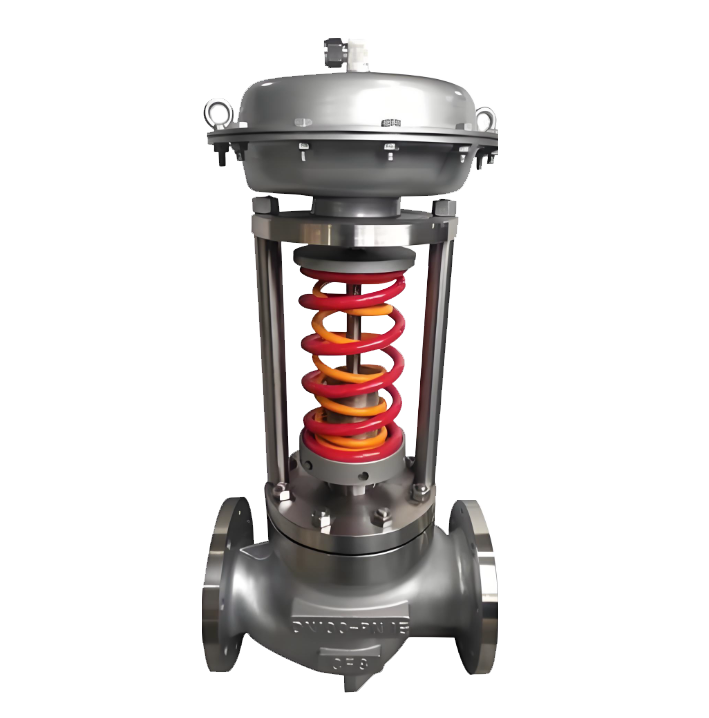 ZZYP Self-Operated Pressure Reducing Valve
Model:
ZZYP - 16C/ZZYP - 16P/ZZYP - 40P/ZZYP - 64PSpecification:
DN20-DN300Pressure:
PN16,PN40,PN64Material:
Stainless steel,carbon steel -
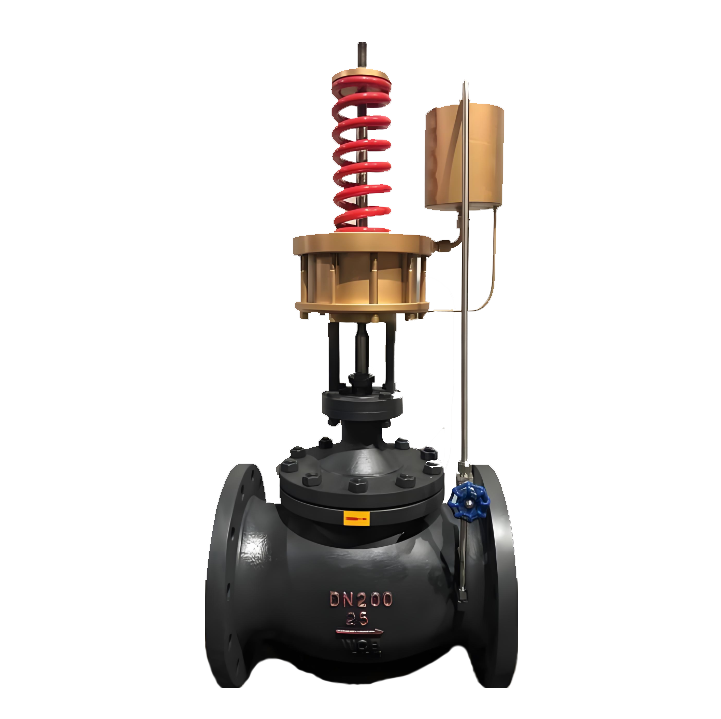 VV231Y Direct-Acting Self-Operated Steam Pressure Reducing Valve
Model:
VV231YSpecification:
DN15-DN800Pressure:
PN16,PN40Material:
Cast Iron、Cast Steel、Stainless Steel

Is the noise from the pressure reducing valve disturbing? Understand the 3 fundamental reasons and solutions in one article
The harsh noise generated by pressure reducing valves during operation is not only an environmental pollution problem, but also a precursor to equipment failure. This article will delve into the three fundamental causes of noise generated by pressure reducing valves - mechanical vibration noise, fluid dynamics noise, and aerodynamic noise, and provide professional solutions.
1、 Mechanical vibration noise: a test of design and process
Mechanical vibration noise is the most common type of noise in pressure reducing valves, mainly divided into two forms:
1. Low frequency vibration noise
Causes:
Medium jet and pressure pulsation
The outlet flow rate of the valve is too fast
Unreasonable pipeline layout
Insufficient rigidity of moving parts inside the valve
2. High frequency vibration noise (resonance phenomenon)
Causes:
The natural frequency of the valve coincides with the excitation frequency of the medium
Easy to occur within a specific decompression range
Sensitive to changes in working conditions, with significant noise fluctuations
Solution:
Optimize the clearance design between the liner and valve stem
Improve machining accuracy
Adjust the natural frequency of the valve
Enhance the rigidity of active components
Select appropriate damping materials
2、 Fluid Dynamics Noise: Challenges in Fluid Control
The turbulence and eddies generated when the fluid passes through the pressure reducing valve can cause significant noise problems.
1. Turbulent noise
Features: Low frequency, low noise level
Cause: Interaction between turbulent fluid and the inner surface of valves/pipelines
Impact: Usually does not constitute a serious noise problem
2. Cavitation noise (the most harmful)
Production mechanism:
During the depressurization process, the fluid flow velocity reaches the critical value
The liquid begins to vaporize, producing bubbles
Bubble explosion under pressure generates shock waves
Local instantaneous pressure can reach 196 MPa
Key data:
Initial value of Δ p: the critical pressure reduction value at which liquid begins to cavitation
Exceeding this value leads to a sharp increase in noise
Preventive measures:
Control the actual pressure reduction value below the critical value
Optimize the design of valve disc fluid direction
Adopting a multi-stage decompression structure
Choose anti cavitation materials
3、 Aerodynamic noise: characteristics of compressible fluids
When compressible fluids such as steam pass through pressure reducing areas, unique noise issues arise:
Production principle:
Conversion of fluid mechanical energy into sound energy
Interaction between high-speed airflow and valve structure
Sudden pressure changes cause gas expansion and sound emission
Control method:
Optimize the design of pressure reducing flow channels
Using mufflers or diffusers
Control the outlet flow rate
Reasonably set back pressure
Comprehensive solutions and selection suggestions
Preventive measures during the design phase
Parameter optimization: Accurately calculate operating parameters to ensure that the pressure reduction value is within the design range
Structural design: Adopting streamlined flow channels to reduce turbulence generation
Material selection: Select special alloys with high rigidity and cavitation resistance
Frequency analysis: avoid the natural frequency of the valve coinciding with the excitation frequency
Key points for installation and maintenance
Correct installation: Ensure the length of the front and rear straight pipe sections to avoid sharp bends
Regular testing: Establish a noise monitoring mechanism to detect problems early on
Timely maintenance: replace worn parts and maintain the best condition of the valve
Brand selection recommendation
High pressure differential operating condition: choose multi-stage pressure reducing valve
Liquid medium: focus on anti cavitation design
Gas/Steam: Focus on Aerodynamic Optimization
Sensitive environment: Choose a low-noise dedicated model
Professional Technical Summary
The essence of the noise problem of pressure reducing valves is the process of energy conversion and release. Fundamentally, all noise issues are closely related to the rationality of valve design, manufacturing process accuracy, and compatibility with operating conditions. Through scientific selection, correct installation, and standardized maintenance, it is entirely possible to control the noise of the pressure reducing valve within an acceptable range.
Immediate action suggestion: If you are troubled by pressure reducing valve noise, it is recommended to first record the noise characteristics (frequency, time period, change pattern), check whether the operating parameters deviate from the design values, and promptly contact professional technicians for diagnosis and treatment.
Keywords of this article: pressure reducing valve noise, mechanical vibration noise, cavitation noise, fluid dynamics noise, pressure reducing valve failure, valve noise reduction, industrial noise control, equipment maintenance
Extended reading: For more professional knowledge about industrial valve selection and maintenance, please follow our technical column to obtain the latest solutions and industry practice cases.

Address:No. 1, Linxia Road, Sanqiao Industrial Zone, Oubei Sub-district, Yongjia County, Zhejiang Province| Switchboard:0577-67198981| mobile:+8613388552747| Email:sales@shanliuvalve.com|
COPYRIGHT © Zhejiang Shanliu Valve Technology Co., Ltd. Main Business: Water Valve Industrial valve|
浙ICP备2026020749号