Your location:
 /
valves
/
check valve
/
Lift Check Valve
/
H42F46 Fluorine-Lined Lift Check Valve
/
valves
/
check valve
/
Lift Check Valve
/
H42F46 Fluorine-Lined Lift Check Valve

Mark Classification of Fluid products
- Phone:+86(577)67198981
- Fax:+86(577)67038872
- mobile:+8613388552747
- Sales Email 1:Karrie@shanliuvalve.com
- Sales Email 2:Yannie@shanliuvalve.com
- Sales Email 3:Merry@shanliuvalve.com
- Sales Email 4:Lucas@shanliuvalve.com
- Email:sales@shanliuvalve.com

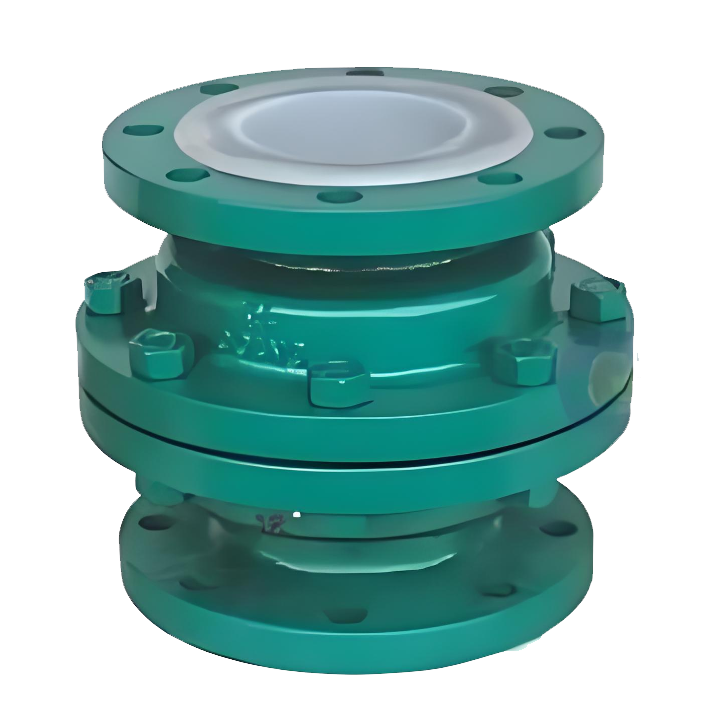
H42F46 Fluorine-Lined Lift Check Valve
- Model: H42F46-16C/ H42F46-10C/ H42F46-25C/ H42F46-16/ H42F46-10/ H42F46-25/ H42F46-16P/ H42F46-25P
- Specification:DN25-DN150
- Temperature:≤150 ℃
- Medium: Sulfuric Acid, Hydrochloric Acid, Strong Oxidizers, Liquid Media
- Pressure:PN10,PN16,PN25
- Connection method:Flange
- Driving method:automated
- Material:Cast Iron, Cast Steel, Stainless Steel Lined with FEP/PTFE


Add QR code to serve you!
- Product Overview
- Performance Data
- Size Weight
H42F46 Fluorine-Lined Lift Check Valve Overview
The H42F46 Fluorine-Lined Lift Check Valve is a specialized valve designed for highly corrosive media. Its valve body and inner surface are entirely lined with fluoroplastic materials such as perfluoroalkoxy (FEP) or polytetrafluoroethylene (PTFE). Featuring flanged connections and a lift-type structure, the valve achieves unidirectional flow control through the vertical motion of its disc.
The working principle involves the disc lifting open under the pressure of forward-flowing medium and automatically closing under its own weight and reverse pressure when the medium stops or reverses. The sealing surfaces are typically composed of corrosion-resistant alloys or fluoroplastics.
By leveraging the exceptional chemical inertness of fluoroplastics, this valve can withstand erosion from most strong acids, strong alkalis, organic solvents, and various mixed corrosive media. It is widely used in corrosive media pipeline systems across industries such as chemical processing, pharmaceuticals, metallurgy, electroplating, and environmental protection, serving as a critical safety device to prevent the backflow of harmful media.
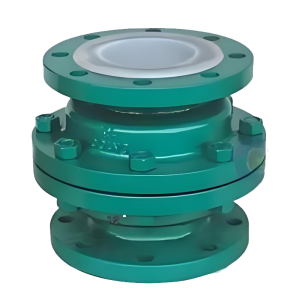
H42F46 Fluorine-Lined Lift Check Valve Product Image
H42F46 Fluorine-Lined Lift Check Valve Features
1. Outstanding Corrosion Resistance
The valve body cavity and flow passage components are fully lined with fluoroplastics such as FEP/PTFE, offering excellent resistance to almost all concentrations of acids, alkalis, salts, and organic solvents. This effectively addresses the corrosion vulnerability of metal valves.
2. Reliable Sealing and Safety
The sealing pair is specifically optimized for corrosive media, ensuring dependable closure and sealing performance. It effectively prevents the backflow of hazardous media, safeguarding upstream equipment and operational safety.
3. Strict Installation Requirements
The valve must be installed strictly horizontally with the valve stem kept vertical to ensure the disc can freely return under gravity. Correct installation orientation is fundamental to its proper operation.
4. Lightweight and Anti-Adhesion Properties
The fluoroplastic lining features a smooth, dense surface with an extremely low friction coefficient, minimizing adhesion of crystalline or deposited media. This design results in low flow resistance and a relatively lightweight valve structure.
5. Application Scope and Limitations
The operating temperature and pressure ranges are limited by the properties of the fluoroplastic lining (typically suitable for -20°C to 150°C and low to medium-pressure applications). It is not recommended for use with media containing hard particles, highly abrasive conditions, or extreme vacuum environments. Care must be taken during installation and maintenance to avoid damaging the lining layer.
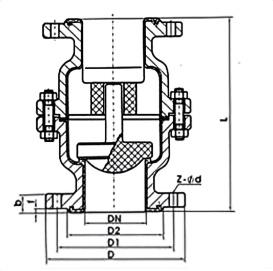
H42F46 Fluorine-Lined Lift Check Valve Structure Diagram
Parts Name Material List
| 序 号NO. | 名称Name | 材料Material |
| 4 | 阀瓣disc | 铸钢,不锈钢,内衬Cast Steel, Stainless Steel Lined with FEP/PTFE) |
| 3 | 阀盖bonnet | 铸铁,铸钢,不锈钢,内衬Cast Iron, Cast Steel, Stainless Steel Lined with FEP/PTFE |
| 2 | 垫圈gasket | FEP(F46)、PCTFE(F3)、PTFE(F4) |
| 1 | 阀体body | 铸铁,铸钢,不锈钢,内衬Cast Iron, Cast Steel, Stainless Steel Lined with FEP/PTFE |
| 性能规范表Performance Specification | ||
| 公称压力Nominal Pressure | 1.0/1.6/2.5 | Mpa |
| 强度试验压力Shell Test | 1.5/2.4/3.75 | |
| 密封试验压力Seal Test | 1.1/1.76/2.75 | |
| 适用温度Suitable Temp. | ≤150 | ℃ |
Dimensions Standard Requirements
1. The structural length of the valve shall conform to the standard GB/T 12221.
2. The connecting flange shall conform to the standard JB/T79-94、GB9113.1-26.
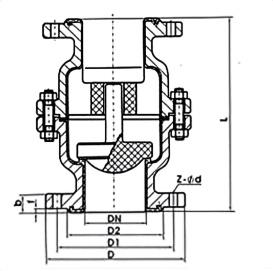
H42F46 Fluorine-Lined Lift Check Valve View Drawing
H42F46 Fluorine-Lined Lift Check Valve Dimensions Table
| SIZE | PN6尺寸 mm | ||||||
| DN | L | D | D1 | D2 | f | b | Z-Φd |
| 25 | 152 | 100 | 75 | 60 | 3 | 14 | 4-Φ12 |
| 32 | 152 | 120 | 90 | 70 | 3 | 16 | 4-Φ14 |
| 40 | 178 | 130 | 100 | 80 | 3 | 16 | 4-Φ14 |
| 50 | 178 | 140 | 110 | 90 | 3 | 16 | 4-Φ14 |
| 65 | 190 | 160 | 130 | 110 | 3.5 | 18 | 4-Φ14 |
| 80 | 203 | 185 | 150 | 125 | 3.5 | 18 | 4-Φ18 |
| 100 | 267 | 205 | 170 | 145 | 4 | 20 | 4-Φ18 |
| 125 | 305 | 235 | 200 | 175 | 4 | 20 | 8-Φ18 |
| 150 | 394 | 260 | 225 | 200 | 4 | 20 | 8-Φ18 |
| SIZE | PN10尺寸 mm | ||||||
| DN | L | D | D1 | D2 | f | b | Z-Φd |
| 25 | 152 | 115 | 85 | 65 | 3 | 16 | 4-Φ14 |
| 32 | 152 | 135 | 100 | 70 | 3 | 18 | 4-Φ18 |
| 40 | 178 | 145 | 110 | 85 | 3 | 18 | 4-Φ18 |
| 50 | 178 | 160 | 125 | 100 | 3 | 18 | 4-Φ18 |
| 65 | 190 | 180 | 145 | 120 | 3.5 | 20 | 4-Φ18 |
| 80 | 203 | 195 | 160 | 135 | 3.5 | 20 | 4-Φ18 |
| 100 | 267 | 215 | 180 | 155 | 4 | 22 | 8-Φ18 |
| 125 | 305 | 245 | 210 | 185 | 4 | 24 | 8-Φ18 |
| 150 | 394 | 280 | 240 | 210 | 4 | 24 | 8-Φ23 |
-
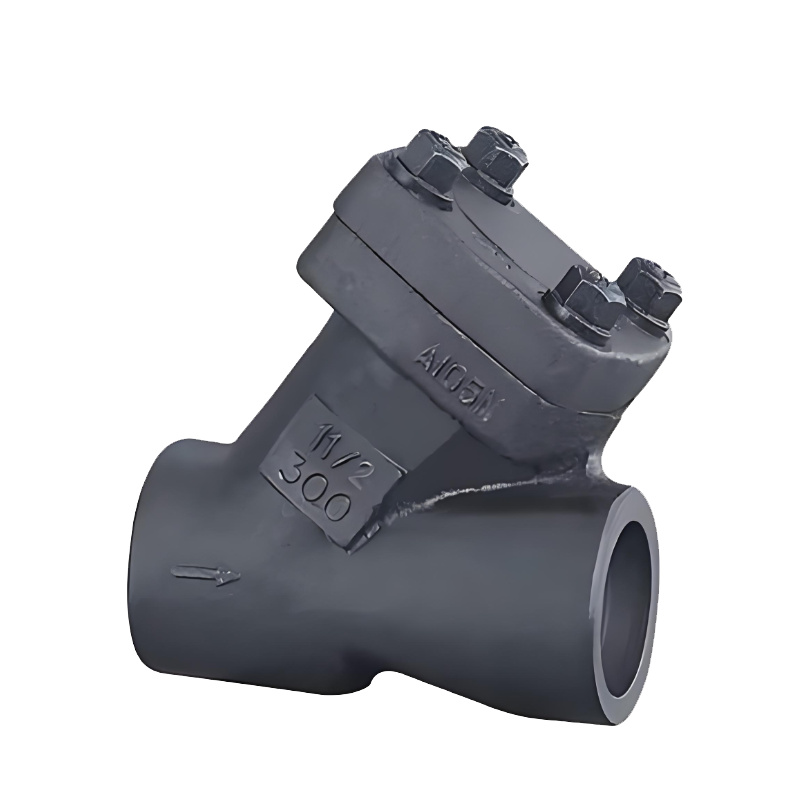 H61Y Forged Steel Y-Type Check Valve
Model:
H61YSpecification:
DN10-50Pressure:
PN20-PN150Material:
forged steel,forged stainless steel -
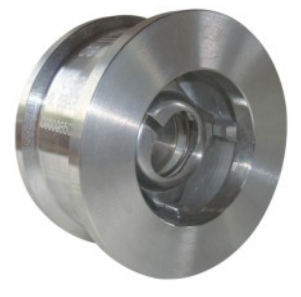 H71H Wafer-Type Lift Check Valve
Model:
H71H-10C/H71H-16C/H71H-25C/H71H-40C/H71H-10P/H71H-25P/H71H-40PSpecification:
DN15-DN200Pressure:
PN10-PN40Material:
WCB、Stainless Steel -
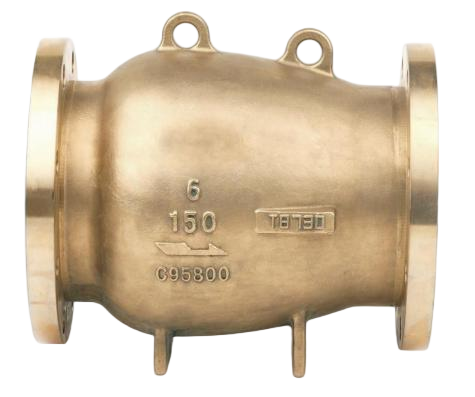 GLH41W Axial Flow Check Valve
Model:
GLH41W-150LB/GLH41W-300LB/GLH41W-600LB/GLH41W-900LB/GLH41W-1500LB/GLH41W-2500LBSpecification:
2"-36"Pressure:
CL150 - 2500LBMaterial:
Carbon Steel,Stainless Steel, DuplexSS,Monel, AL-Bronze

Complete Guide to Check Valve Selection and Installation: Detailed Explanation of Principles, Selection, and Key Construction Points Check valves, as crucial safety components in pipeline systems, are essential for preventing medium backflow and ensuring safe system operation. This article will provide you with a comprehensive guide to the selection and installation of check valves.
1. Operating Principle and Classification of Check Valves 1.1 What is a Check Valve?
Check valves, also known as one-way valves or non-return valves, belong to the category of automatic valves. Their working principle is to achieve opening and closing through the flow force of the medium itself. Their core function is to prevent the reverse flow of pipeline medium and ensure one-way flow.
1.2 Main application scenario: foot valve (a special type of check valve) at the water pump suction inlet
Various pipeline systems requiring unidirectional flow of medium
Industrial settings where accidents caused by medium backflow are to be prevented
II. Selection Criteria and Guidelines for Check Valves 2.1 Basic Selection Principles Medium Adaptability: Suitable for clean medium conditions, not recommended for pipelines containing solid particles or high viscosity media.
2.2 Selection of pipeline size (DN) based on pipeline size. Recommended valve types. Applicable pressure range: DN<50mm. Butterfly check valve, vertical lift check valve, diaphragm check valve. Low-pressure environment: 50mm
Advantages: Effectively eliminates the water hammer phenomenon
Limitations: Subject to temperature and pressure constraints, suitable for low-pressure and normal-temperature pipelines
Applicable scenario: Water supply pipelines prone to water hammer
Slow-closing check valve:
Slow-closing swing check valve
Slow-closing butterfly check valve
Applicable scenario: pipeline systems that require minimal or no water hammer impact when shut down
III. Installation specifications and construction requirements for check valves 3.1 Preparatory work before installation Appearance inspection:
Check the valve nameplate information to ensure compliance with the GB 12220 "General Valve Marking" standard
Check the integrity of the valve and confirm that it is undamaged
Pressure test requirements:
If the working pressure exceeds 1.0 MPa or the main pipe shut-off valve is involved, a pressure test must be conducted
Strength test: Nominal pressure × 1.5, duration ≥ 5 minutes, no leakage is considered as qualified
Tightness test: nominal pressure × 1.1, determine the duration according to GB 50243 standard
3.2 Installation location and direction: Strictly follow the design drawings to determine the location, height, and inlet and outlet directions
Flow direction indicator: Ensure that the flow direction of the medium is completely consistent with the direction indicated by the arrow on the valve body
Pipe support:
It is prohibited to let the check valve bear the weight of the pipeline
Large check valves must be equipped with independent support structures
Avoid direct impact of piping pressure on the valve
3.3 Lift check valves are required for specific types of installations:
Vertical flap type: It must be installed on a vertical pipeline
Horizontal flap type: It must be installed on a horizontal pipeline
Swing check valve:
Ensure that the valve disc's rotating shaft is in a horizontal position during installation
Special attention should be paid to the flow direction of the medium during inclined installation
IV. Common Installation Errors and Precautions 4.1 Example of Incorrect Installation: Installing a Vertical Lift Check Valve on a Horizontal Pipe
The valve flow direction is reversed
Large valves have no independent support
Pressure testing was not conducted according to specifications
4.2 The selection and installation location of check valves should be considered during the design phase of the professional advice system
Provide complete operating condition parameters to the supplier during procurement to obtain professional selection advice
For complex systems, it is recommended to consult a professional valve engineer
Conduct regular maintenance and inspection to ensure the check valve operates in normal condition
5. Maintenance points: Regularly check whether the valve can be opened and closed flexibly
Monitor for abnormal sounds, such as water hammer impact
Check the sealing performance to prevent internal leakage
Lubricate the moving parts to ensure normal operation
The correct selection and installation of check valves are crucial for ensuring the safe operation of pipeline systems. Following the selection guidelines and installation specifications provided in this article can prevent various accidents caused by medium backflow, extend the service life of valves, and reduce maintenance costs.
In practical applications, it is recommended to consider specific engineering requirements and medium characteristics, and if necessary, consult professional valve technicians to ensure the optimization of the selection and installation plan.

Address:No. 1, Linxia Road, Sanqiao Industrial Zone, Oubei Sub-district, Yongjia County, Zhejiang Province| Switchboard:0577-67198981| mobile:+8613388552747| Email:sales@shanliuvalve.com|
COPYRIGHT © Zhejiang Shanliu Valve Technology Co., Ltd. Main Business: Water Valve Industrial valve|
浙ICP备2026020749号