Your location:
 /
valves
/
check valve
/
Swing Check Valve
/
H44W API Swing Check Valve
/
valves
/
check valve
/
Swing Check Valve
/
H44W API Swing Check Valve

Mark Classification of Fluid products
- Phone:+86(577)67198981
- Fax:+86(577)67038872
- mobile:+8613388552747
- Sales Email 1:Karrie@shanliuvalve.com
- Sales Email 2:Yannie@shanliuvalve.com
- Sales Email 3:Merry@shanliuvalve.com
- Sales Email 4:Lucas@shanliuvalve.com
- Email:sales@shanliuvalve.com

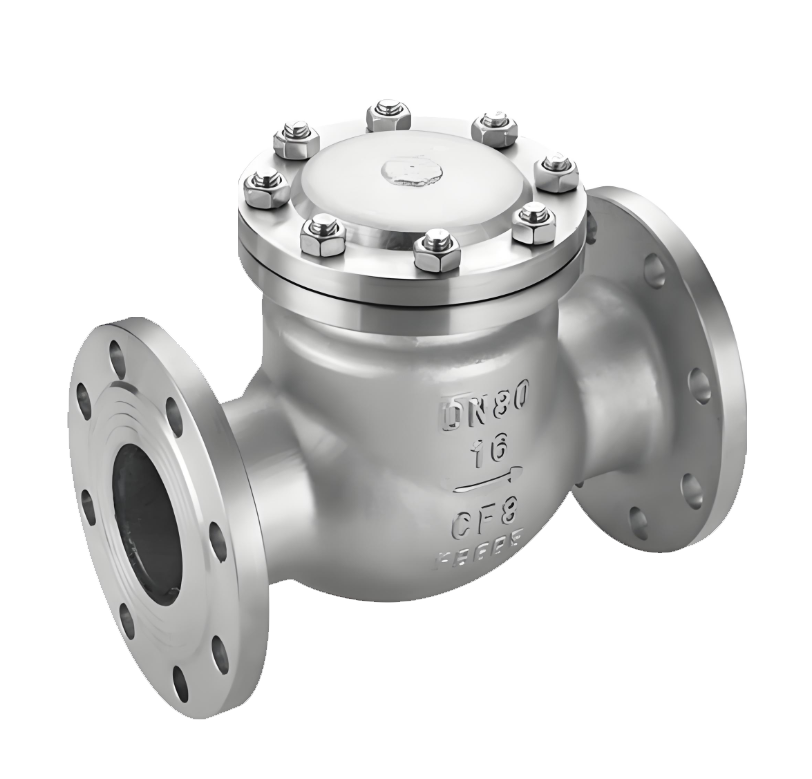
H44W API Swing Check Valve
- Model:H44W-Cl150P/H44W-Cl300P/H44W-Cl600P/H44W-Cl900P/H44W-CL1500P/H44W-Cl150C/H44W-Cl300C/H44W-Cl600C/H44W-Cl900C/H44W-CL1500C
- Specification:1/2”-48”
- Temperature:≤ 540 ℃
- Medium:Water, Oil , Steam
- Pressure:150LB,300LB,600LB,900LB,1500LB
- Connection method:Flange
- Driving method:automated
- Material:Carbon Steel,Stainless Steel


Add QR code to serve you!
- Product Overview
- Performance Data
- Size Weight
H44W API Check Valve Overview
The H44W API Swing Check Valve is a flanged check valve designed and manufactured in accordance with American standards (ASME/API), featuring a swing-type structure. The valve body is typically made of materials such as A216 WCB cast steel or CF8 stainless steel, with pressure ratings ranging from Class 150 to Class 600. The valve operates by using the forward flow of the medium to push the disc open as it rotates around its pivot. When the medium stops or reverses flow, the disc automatically closes under its own weight and reverse pressure, achieving reliable unidirectional flow control. Strictly compliant with standards such as API 6D, this valve is specifically designed for high-pressure, high-temperature, and demanding pipeline systems in industries such as petroleum, natural gas, chemical processing, and power plants. It effectively prevents backflow of water, steam, oil products, and corrosive media, making it a critical component for ensuring the safe operation of industrial facilities.
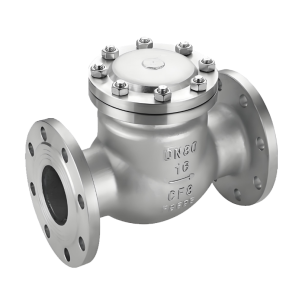
H44W API Check Valve Product Image
H44W American Standard Swing Check Valve Features
1. Strict Compliance with American Standards
The design, manufacturing, and testing fully adhere to standards such as ASME B16.34 and API 6D, ensuring the valve meets international project requirements in terms of pressure ratings, structural dimensions, material performance, and interchangeability.
2. High Pressure and Temperature Resistance with Metal Hard Sealing
The disc and seat are often overlay-welded with hard alloys or feature stainless steel sealing surfaces, providing excellent resistance to erosion and high temperatures. This makes the valve suitable for high-pressure differentials, high temperatures, and media containing particles, ensuring a long service life.
3. Flexible Installation and Low Pressure Loss
The swing-type design allows for horizontal or vertical installation (with upward flow direction), offering strong adaptability. When fully open, the disc causes minimal flow resistance, barely affecting pipeline flow and system energy consumption.
4. Robust Structure and High Safety Reliability
The valve body is designed with high structural strength, capable of withstanding pipeline stress and pressure impacts. Some models are equipped with fireproof and anti-static designs. The durable hinge mechanism ensures rapid closure, effectively mitigating water hammer effects.
5. Easy Maintenance and Wide Applicability The structural design facilitates online inspection, with some models supporting quick maintenance. Suitable for various industrial media such as petroleum, chemicals, LNG, and power plants, this valve is a preferred check device for high-standard pipeline systems.
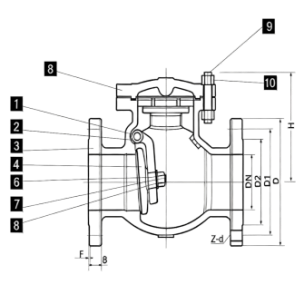
H44W API Check Valve Structure Diagram
Parts Name Material List
| 序 号NO. | 名称Name | 材料Material |
| 1 | 阀体/BODY | 碳钢、不锈钢carbon steel、stainless steel |
| 2 | 阀瓣/DISC | 碳钢、不锈钢carbon steel、stainless steel |
| 3 | 垫片/GASKET | Graphite |
| 4 | 螺母/NUT | A194-B8 |
| 5 | 双头螺栓/BOLT | A193-8 |
| 6 | 摇臂/ROCKER ARM | 碳钢、不锈钢carbon steel、stainless steel |
| 7 | 插销/PLUG | 不锈钢stainless steel |
| 8 | 阀盖/CAP | 碳钢、不锈钢carbon steel、stainless steel |
| 9 | 六角螺母 | A194-B4 |
| 10 | 双头螺栓/BOLT | A193-8 |
| 性能规范表Performance Specification | ||
| 公称压力Nominal Pressure | 2-25(150LB-1500LB) | Mpa |
| 强度试验压力Shell Test | 3-37.5 | |
| 密封试验压力Seal Test | 2.2-27.5 | |
| 适用温度Suitable Temp. | ≤540 | ℃ |
Dimensions Standard Requirements
1. The structural length of the valve shall conform to the standard ASME B16.10.
2. The connecting flange shall conform to the standard ASEM B16.50.
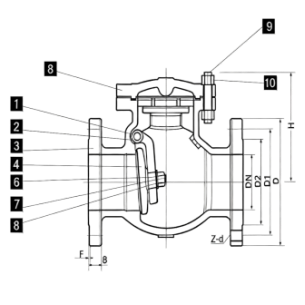
H44W API Check Valve View Drawing
H44W API Check Valve Dimensions Table
| DN | H | D | D1 | D2 | B | F | Z-d |
| 1.2” | 120 | 135 | 100 | 78 | 18 | 2 | 4-18 |
| 1.5” | 130 | 145 | 110 | 85 | 18 | 3 | 4-18 |
| 2” | 140 | 160 | 125 | 100 | 20 | 3 | 4-18 |
| 2.5” | 160 | 180 | 145 | 120 | 22 | 3 | 8-18 |
| 3” | 185 | 195 | 160 | 135 | 22 | 3 | 8-18 |
| 4” | 210 | 230 | 190 | 160 | 24 | 3 | 8-23 |
| 5” | 250 | 270 | 220 | 188 | 28 | 3 | 8-25 |
| 6” | 300 | 300 | 250 | 218 | 30 | 3 | 8-25 |
| 8” | 380 | 360 | 310 | 278 | 34 | 3 | 12-25 |
-
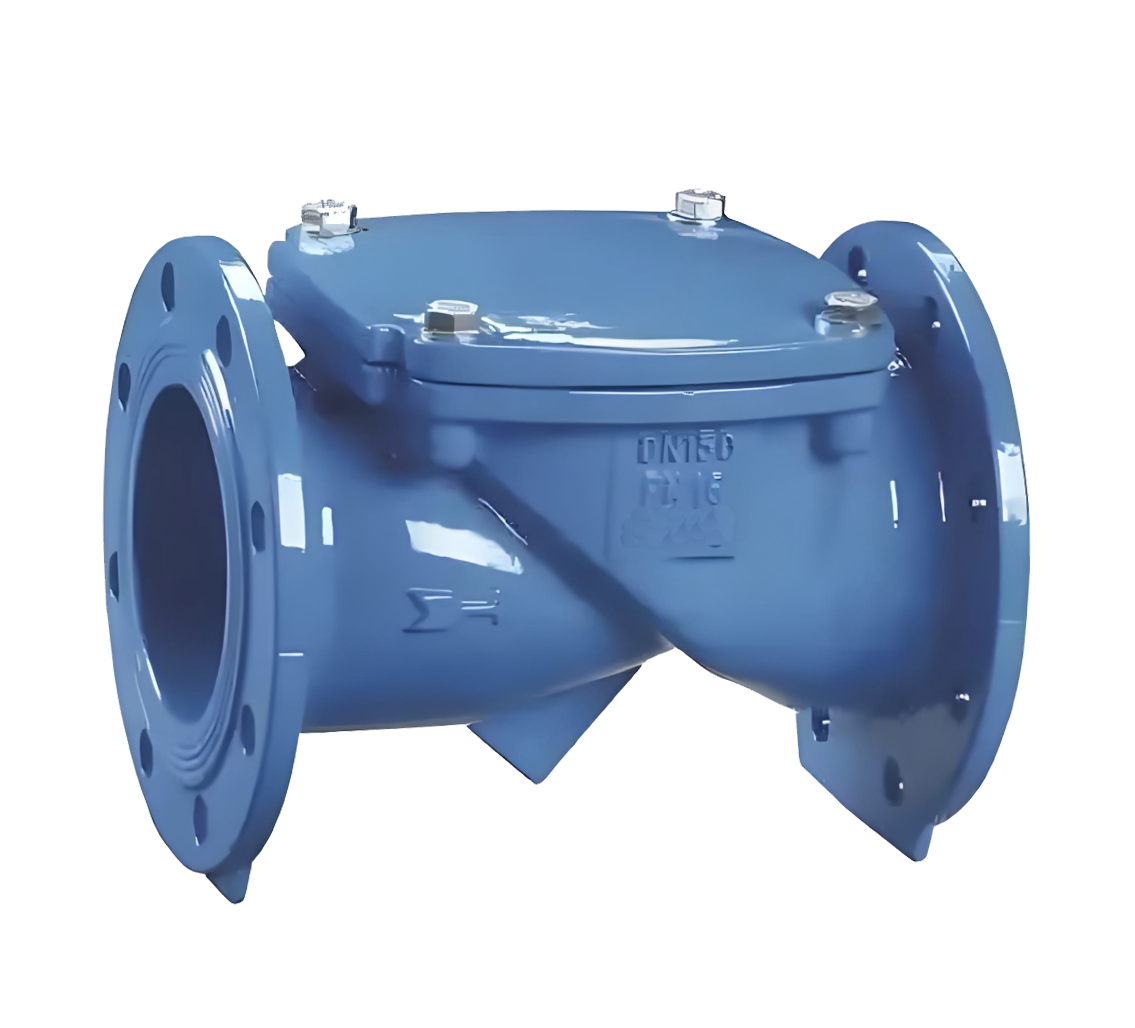 HC44X Swing Flex Check Valve
Model:
HC44X-10Q/HC44X-16Q/HC44X-25Q/HC44X-25C/HC44X-16C/HC44X-16P/HC44X-25PSpecification:
DN50-DN600Pressure:
PN10,PN16,PN25Material:
Ductile iron,cast iron,stainless steel -
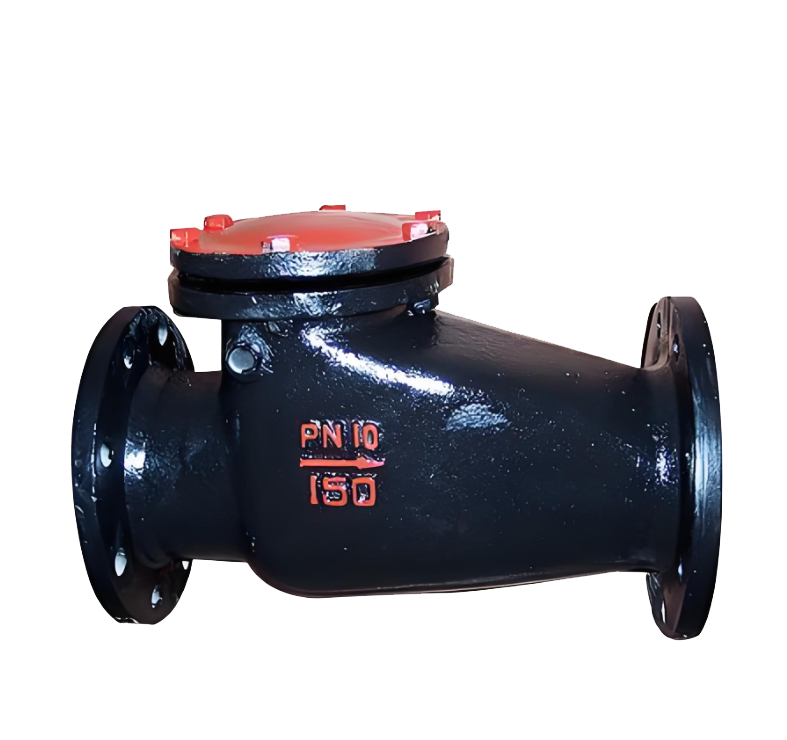 H44T Cast Iron Swing Check Valve
Model:
H44T-10/H44T-16Specification:
DN40-400Pressure:
PN10,PN16Material:
Grey iron -
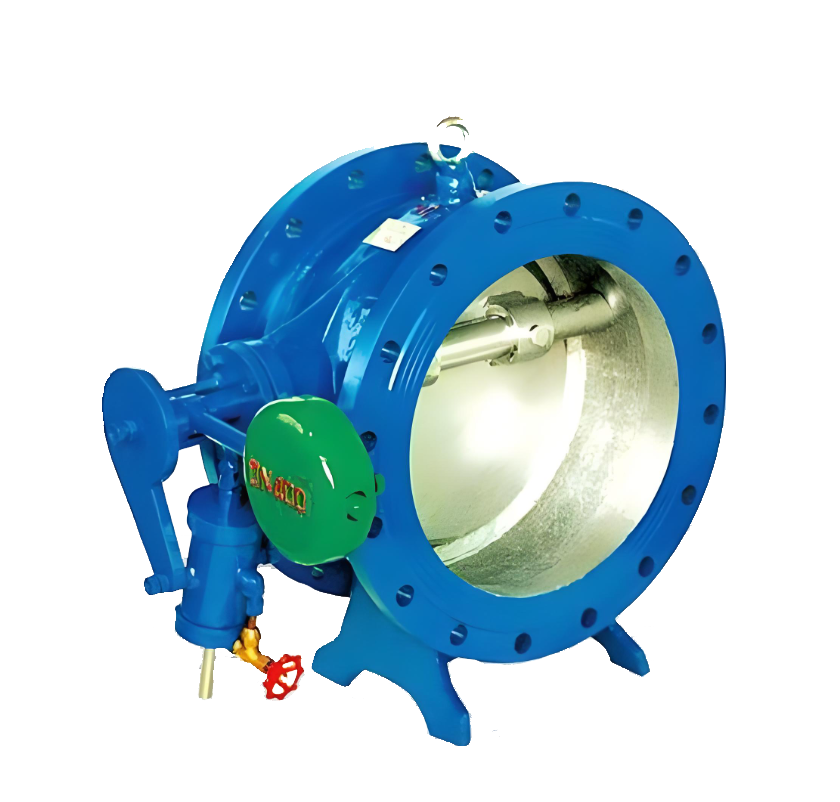 HH47X Buffered Butterfly Check Valve
Model:
HH47X-10/HH47X-16/HH47X-25/HH47X-10Q/HH47X-16Q/HH47X-25Q/HH47X-10C/HH47X-16C/HH47X-25CSpecification:
DN200-DN1400Pressure:
PN10,PN16,PN25Material:
Ductile iron,Stainless steel,carbon steel

Complete Guide to Check Valve Selection and Installation: Detailed Explanation of Principles, Selection, and Key Construction Points Check valves, as crucial safety components in pipeline systems, are essential for preventing medium backflow and ensuring safe system operation. This article will provide you with a comprehensive guide to the selection and installation of check valves.
1. Operating Principle and Classification of Check Valves 1.1 What is a Check Valve?
Check valves, also known as one-way valves or non-return valves, belong to the category of automatic valves. Their working principle is to achieve opening and closing through the flow force of the medium itself. Their core function is to prevent the reverse flow of pipeline medium and ensure one-way flow.
1.2 Main application scenario: foot valve (a special type of check valve) at the water pump suction inlet
Various pipeline systems requiring unidirectional flow of medium
Industrial settings where accidents caused by medium backflow are to be prevented
II. Selection Criteria and Guidelines for Check Valves 2.1 Basic Selection Principles Medium Adaptability: Suitable for clean medium conditions, not recommended for pipelines containing solid particles or high viscosity media.
2.2 Selection of pipeline size (DN) based on pipeline size. Recommended valve types. Applicable pressure range: DN<50mm. Butterfly check valve, vertical lift check valve, diaphragm check valve. Low-pressure environment: 50mm
Advantages: Effectively eliminates the water hammer phenomenon
Limitations: Subject to temperature and pressure constraints, suitable for low-pressure and normal-temperature pipelines
Applicable scenario: Water supply pipelines prone to water hammer
Slow-closing check valve:
Slow-closing swing check valve
Slow-closing butterfly check valve
Applicable scenario: pipeline systems that require minimal or no water hammer impact when shut down
III. Installation specifications and construction requirements for check valves 3.1 Preparatory work before installation Appearance inspection:
Check the valve nameplate information to ensure compliance with the GB 12220 "General Valve Marking" standard
Check the integrity of the valve and confirm that it is undamaged
Pressure test requirements:
If the working pressure exceeds 1.0 MPa or the main pipe shut-off valve is involved, a pressure test must be conducted
Strength test: Nominal pressure × 1.5, duration ≥ 5 minutes, no leakage is considered as qualified
Tightness test: nominal pressure × 1.1, determine the duration according to GB 50243 standard
3.2 Installation location and direction: Strictly follow the design drawings to determine the location, height, and inlet and outlet directions
Flow direction indicator: Ensure that the flow direction of the medium is completely consistent with the direction indicated by the arrow on the valve body
Pipe support:
It is prohibited to let the check valve bear the weight of the pipeline
Large check valves must be equipped with independent support structures
Avoid direct impact of piping pressure on the valve
3.3 Lift check valves are required for specific types of installations:
Vertical flap type: It must be installed on a vertical pipeline
Horizontal flap type: It must be installed on a horizontal pipeline
Swing check valve:
Ensure that the valve disc's rotating shaft is in a horizontal position during installation
Special attention should be paid to the flow direction of the medium during inclined installation
IV. Common Installation Errors and Precautions 4.1 Example of Incorrect Installation: Installing a Vertical Lift Check Valve on a Horizontal Pipe
The valve flow direction is reversed
Large valves have no independent support
Pressure testing was not conducted according to specifications
4.2 The selection and installation location of check valves should be considered during the design phase of the professional advice system
Provide complete operating condition parameters to the supplier during procurement to obtain professional selection advice
For complex systems, it is recommended to consult a professional valve engineer
Conduct regular maintenance and inspection to ensure the check valve operates in normal condition
5. Maintenance points: Regularly check whether the valve can be opened and closed flexibly
Monitor for abnormal sounds, such as water hammer impact
Check the sealing performance to prevent internal leakage
Lubricate the moving parts to ensure normal operation
The correct selection and installation of check valves are crucial for ensuring the safe operation of pipeline systems. Following the selection guidelines and installation specifications provided in this article can prevent various accidents caused by medium backflow, extend the service life of valves, and reduce maintenance costs.
In practical applications, it is recommended to consider specific engineering requirements and medium characteristics, and if necessary, consult professional valve technicians to ensure the optimization of the selection and installation plan.

Address:No. 1, Linxia Road, Sanqiao Industrial Zone, Oubei Sub-district, Yongjia County, Zhejiang Province| Switchboard:0577-67198981| mobile:+8613388552747| Email:sales@shanliuvalve.com|
COPYRIGHT © Zhejiang Shanliu Valve Technology Co., Ltd. Main Business: Water Valve Industrial valve|
浙ICP备2026020749号